New Delhi, Delhi, India
In keeping with WHO’s World Mental Health theme for this year, ‘Lived experiences heard: real voices, real change’, a key focus of the India Mental Health Alliance’s convening in Delhi this week was ‘experience-based knowledge’. This encompasses not only individual lived experience, but also the knowledge and insights generated by community and grassroots organisations through their work within specific cultural contexts and local realities, that help shape care practices and policy.
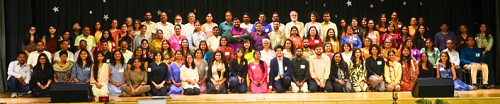
The 3rd convening under IMHA’s ‘Connecting India for Mental Health’ series took place in Delhi with 86 member organisations from 12 states
As part of the year round series ‘Connecting India for Mental Health’, 86 member organisations convened in Delhi for the third regional convening following Guwahati & Mumbai meets. The series brings IMHA 370+ alliance organisations together across geographies and sectors to build connections, share knowledge and strengthen collaboration within India’s mental health ecosystem. The next regional meet is scheduled in Bengaluru on 4th December 2026.
Neha Kirpal, Co-founder IMHA said, “In a country as diverse as India, where needs, experiences and realities vary significantly across communities; a decentralised, community-driven approach to mental healthcare is critical. Such an approach can help bridge the fragmentation & lack of access, bring greater cohesion across stakeholders, and ensure that mental health systems are informed by the realities of the communities they serve for lasting impact.”
Nearly a third of the Alliance’s pan-India membership was represented at the Delhi convening; organisations working across health, education, gender, livelihoods, child development, climate in addition to mental health grassroot organisations such as Amar Trishala Sewa Aashram (Muzaffarpur and Sitamarhi, Bihar), Dalit Vikas Abhiyan Samiti (Bihar), Gramin Adiwasi Samaj Vikas Sansthan (Madhya Pradesh), Jago Foundation (Jharkhand), Mithila Kala Vikas Samiti (Bihar), Sahyadri Foundation (Nagpur, Maharashtra), SATRA (Assam), Shikshit Rojgar Kendra Prabandhak Samiti (Rajasthan), Stand for Kashmiri Youth Trust (Jammu & Kashmir), and Swanthana Seva Samithi (Andhra Pradesh, Odisha and Bihar).
Dr Kavita Arora, Founding Cohort, India Mental Health Alliance; Child & Adolescent Psychiatrist; Co-founder at Children First said, “It is now widely recognised, both in India and global institutions like WHO; that an expert-driven, biomedical model focused on tertiary care, cannot by itself address the scale and complexity of mental health needs in a country. To truly respond to the mental health needs of our young and diverse population, we need a more decentralised, preventive and community-driven approach that can reach people earlier, closer to where they live, learn and work. ”
She adds, “There are undiscovered strengths and immense value in surfacing existing community based learnings and knowledge from caregivers and persons with mental illness. IMHA believes the way forward lies in bringing these forms of expertise together with clinical knowledge, grounded in diverse local contexts and realities.”
With this intent, IMHA shared plans for an open-access knowledge exchange hub that will help activate and make these accessible widely for mental health professionals, community organisations and policy makers.