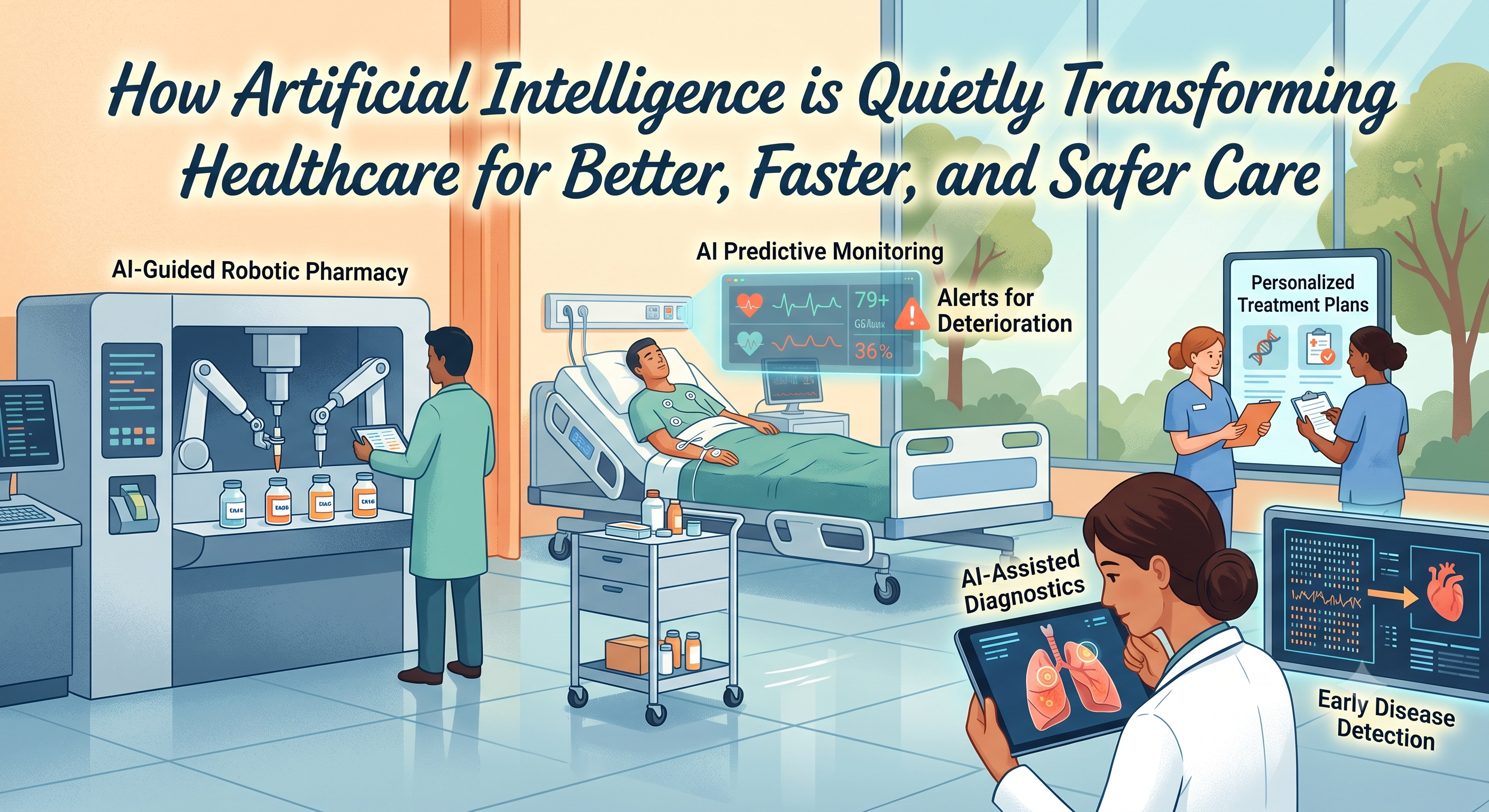
Artificial Intelligence (AI) is no longer a future concept in healthcare—it is already reshaping how diseases are detected, how treatments are planned, and how hospitals operate every day. From early diagnosis to personalised medicine, AI is helping doctors work faster, reduce errors, and deliver more focused patient care.
What makes this shift important is not just technology, but the way it improves real human lives—by catching illnesses earlier, reducing delays, and making healthcare more accessible and efficient.
1. Earlier, Smarter Detection of Diseases
One of AI’s biggest strengths lies in its ability to detect patterns that are often invisible to the human eye. By analysing scans such as X-rays, MRIs, and CT images, AI systems can identify early signs of diseases like cancer, heart disorders, and neurological conditions.
This early insight allows doctors to begin treatment sooner, often improving recovery chances and reducing complications. In many cases, AI acts as a second set of eyes—supporting doctors in making more confident decisions.
2. Care Designed Around Each Patient
Healthcare is becoming more personalised thanks to AI. Instead of a “one-size-fits-all” approach, AI uses patient history, genetic data, and lifestyle information to help doctors design more targeted treatments.
This means fewer side effects, better outcomes, and treatments that are more closely aligned with each patient’s unique health condition. It is a shift toward truly individualised care.
3. Preventing Illness Before It Becomes Serious
AI is helping healthcare move from treatment to prevention. By studying patterns in health records and real-time data, AI can identify early warning signs of chronic illnesses such as diabetes, hypertension, and heart disease.
This allows doctors to intervene early—before conditions become severe—reducing hospital visits and improving long-term health outcomes.
4. Making Hospitals Run More Smoothly
Behind the scenes, AI is helping hospitals become more efficient. Tasks like appointment scheduling, billing, record management, and insurance processing are increasingly being automated.
This reduces pressure on healthcare staff and gives doctors more time to focus on patients rather than paperwork. It also helps reduce delays and improves overall hospital organisation.
5. Faster Development of New Medicines
Developing new drugs traditionally takes years, but AI is speeding up this process. It can analyse large sets of chemical and biological data to identify promising drug candidates more quickly.
This is especially important for complex diseases, where faster research can lead to life-saving treatments reaching patients sooner.
6. Continuous Health Monitoring Outside Hospitals
With wearable devices and smart sensors, patients can now be monitored even at home. AI continuously tracks vital signs like heart rate, oxygen levels, and blood sugar.
If something unusual is detected, alerts are sent to healthcare providers immediately. This is especially helpful for patients with chronic conditions who need constant monitoring.
7. Virtual Health Support Anytime
AI-powered virtual assistants are making healthcare more accessible. They help patients with reminders, basic health questions, appointment scheduling, and guidance.
This 24/7 support system ensures that patients are never completely disconnected from healthcare assistance, even outside hospital hours.
8. Helping Doctors Make Better Decisions
AI acts as a support system for doctors by analysing patient data and comparing it with global medical research. It provides evidence-based suggestions that help in diagnosis and treatment planning.
This is especially useful in complex cases where multiple treatment options exist.
9. Improving Patient Experience
AI is also making healthcare more patient-friendly. Faster processing, reduced waiting times, and better communication tools improve the overall experience for patients.
With fewer administrative burdens, healthcare providers can spend more meaningful time with patients, improving trust and care quality.
10. Smarter Hospital Management
Hospitals use AI to predict patient inflow, manage staff schedules, and allocate resources more efficiently. This helps avoid overcrowding and ensures better service during peak demand periods.
It also improves planning and reduces stress on healthcare systems.
Conclusion
Artificial Intelligence is not replacing doctors—it is supporting them. It is helping healthcare systems become faster, more accurate, and more human-focused.
By combining technology with medical expertise, AI is shaping a future where healthcare is not only more advanced but also more personal, preventive, and accessible to all.