Balasore, Nov 4 (UDN): Bright yellow bananas displayed in fruit shops may look fresh and tempting, but concerns over their safety have emerged in Odisha’s Balasore district following allegations that prohibited chemicals are being used to accelerate the ripening process.
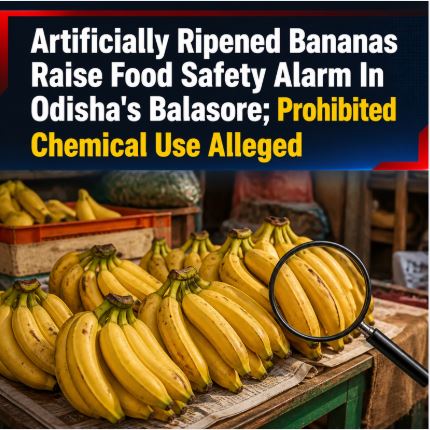
Representational Image
The alleged practice has come to light at the Phandi Chhak fruit market, where traders are accused of using chemical agents to turn green bananas yellow within hours. According to the allegations, raw bananas are subjected to artificial ripening overnight and made ready for sale by the following morning.
The development has triggered concerns among consumers, particularly as artificially ripened fruits can be difficult to distinguish from naturally ripened ones through appearance alone.
Vendor’s Remark Sparks Outrage
During a ground-level interaction at the market, a vendor allegedly made a disturbing remark when questioned about the possible health consequences of selling chemically ripened bananas.
“What do I lose if people eat it and die?” the vendor reportedly said, triggering further concerns over consumer safety and accountability among fruit sellers.
Local resident Brahma Rath alleged that some traders were resorting to chemical methods to speed up ripening and increase sales.
“Chemicals are being used to ripen bananas early so that they can be sold faster, benefiting traders. However, this practice is harmful to people’s health,” he said.
The allegations have raised questions about the monitoring of fruit markets and the enforcement of food safety regulations.
Health Concerns Over Chemical Ripening
Health experts have cautioned against consuming fruits treated with unauthorised ripening agents, pointing to possible adverse effects depending on the chemical involved and the level of exposure.
Dr Mrutyunjay Mahapatra said exposure to harmful chemicals could trigger reactions in the human body and lead to skin and gastrointestinal problems.
“Chemicals generally trigger several reactions in the human body and can cause skin and stomach-related problems. Children are more vulnerable to their harmful effects,” he said.
Children and elderly people are among those who may require particular protection from unsafe food practices.
Traders Admit To Carbide-Based Ripening
Meanwhile, banana traders have denied applying chemicals directly to the fruits but acknowledged using carbide as part of the artificial ripening process.
One trader claimed that carbide is placed at the bottom of banana boxes to accelerate ripening. He also described the process as taking around 12 hours, with the duration reportedly extending to nearly 20 hours during winter.
The claim has brought the spotlight on the distinction between regulated ripening methods and the use of prohibited substances.
Calcium carbide is prohibited for artificial fruit ripening under India’s food safety regulations. Ethylene, when used within prescribed conditions and limits, is an approved ripening agent.
Food Safety Department’s Warning
A food safety officer reportedly confirmed that the chemical in question was prohibited and said inspections were conducted regularly to identify violations.
The officer also stated that fines were imposed against those found violating food safety rules.
However, the allegations at Phandi Chhak have renewed calls for stronger surveillance of fruit markets, proper sample testing and strict action against traders found using prohibited substances.
Consumers Urged To Remain Cautious
The controversy has once again highlighted the need for greater awareness about food safety and responsible fruit trading.
Consumers should remember that colour alone cannot establish whether a banana has been naturally or artificially ripened. Similarly, washing or peeling a fruit cannot reliably eliminate every risk associated with improper chemical treatment.
With the allegations emerging from Balasore, consumers are looking towards the food safety authorities for effective inspections and transparent testing to ensure that fruits sold in local markets meet prescribed safety standards.
For now, the central concern remains clear: the pursuit of faster profits must not come at the cost of public health.