

In this story
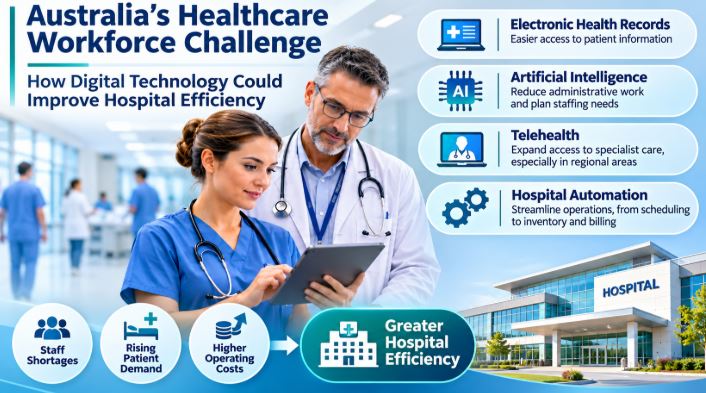
Australia’s hospitals are facing growing pressure as staff shortages, rising patient numbers and increasing operating costs put healthcare services under strain. With doctors and nurses managing demanding workloads, digital technology is emerging as a practical way to improve hospital efficiency, reduce administrative pressure and help healthcare businesses deliver better patient care.
A Healthcare System Under Growing Pressure
Australia’s healthcare sector is experiencing a difficult balancing act. Hospitals need more skilled professionals, but recruiting and retaining doctors, nurses and support staff is becoming increasingly challenging.
At the same time, an ageing population and growing demand for medical services are placing additional pressure on existing facilities. Healthcare workers are often required to manage patient care alongside paperwork, appointment scheduling and other administrative responsibilities.
For hospital management teams, the challenge is not just finding more employees. It is also about making better use of the workforce already available.
This is where digital technology could make a meaningful difference.
How Digital Technology Is Changing Hospital Management
Hospitals are increasingly looking beyond traditional management systems to find smarter ways of handling daily operations.
Electronic health records, digital appointment platforms and automated patient management systems can make information easier to access and reduce time spent on repetitive tasks.
For doctors and nurses, this means less paperwork and more time to focus on patients. For hospital administrators, digital systems provide better visibility into staffing, patient flow and available resources.
The business benefit is equally important. Better coordination can reduce operational delays, improve productivity and help hospitals manage costs more effectively.
Artificial Intelligence Could Give Healthcare Workers More Time
Artificial intelligence is becoming an important part of the healthcare technology market.
AI-powered tools can assist with medical documentation, patient scheduling, administrative communication and the analysis of healthcare data. Some systems can also help hospitals anticipate patient demand and plan staffing requirements.
Imagine a doctor finishing a consultation without spending another 20 minutes completing routine documentation. AI-assisted systems could help reduce this burden, allowing medical professionals to spend more time on clinical responsibilities.
However, technology must remain a support system. Medical decisions still require professional judgement, experience and human care.
Telehealth Is Bringing Healthcare Closer to Patients
For people living in regional and remote parts of Australia, accessing specialist healthcare can involve long journeys and significant expenses.
Telehealth is helping address this problem by allowing patients to consult healthcare professionals through secure digital platforms.
Hospitals can also use virtual consultations for follow-up appointments, routine assessments and specialist support. This can reduce unnecessary hospital visits and make better use of medical professionals’ time.
For healthcare businesses, telehealth also creates opportunities to expand services and reach patients who may otherwise struggle to access regular medical care.
Hospital Automation Can Reduce Everyday Workloads
A hospital operates like a complex business, with several departments working together around the clock. From patient admissions and billing to laboratory coordination and medical inventory, even small administrative delays can affect overall efficiency.
Automation can help simplify these processes.
Digital scheduling tools can support staff shift planning, while automated inventory systems can monitor medical supplies and help prevent shortages. Electronic admission and billing systems can also reduce paperwork and improve administrative accuracy.
These changes may appear small individually, but together they can make hospital operations smoother and more productive.
New Business Opportunities in Digital Healthcare
Australia’s healthcare workforce challenge is creating opportunities for technology companies, software developers and healthcare startups.
Businesses developing AI-powered healthcare platforms, hospital management software, electronic medical records, remote patient monitoring and workforce management solutions are entering an increasingly important market.
Hospitals are not simply looking for new technology. They want solutions that address real operational problems, save time and deliver measurable improvements.
This creates opportunities for technology providers to build long-term partnerships with hospitals, private healthcare groups and other medical institutions.
Companies that understand the everyday challenges faced by healthcare professionals will be better positioned to develop practical and useful solutions.
The Challenges of Going Digital
Despite the potential benefits, digital transformation is not always straightforward.
Introducing new systems requires investment, employee training and careful planning. Cybersecurity and patient data privacy are also major concerns, particularly when hospitals handle large amounts of sensitive medical information.
Another important factor is staff acceptance. Healthcare professionals need systems that are easy to use and genuinely reduce their workload rather than introduce additional complications.
Successful digital transformation therefore requires more than purchasing software. Hospitals need the right technology, proper training and reliable technical support.
Conclusion
Australia’s healthcare workforce challenge is unlikely to disappear overnight. Recruiting skilled professionals will remain essential, but hospitals also need smarter ways to manage their existing resources.
Digital technology offers a practical opportunity to improve hospital operations, reduce administrative pressure and make healthcare services more accessible. From artificial intelligence and automation to telehealth and digital patient management, these solutions can help healthcare professionals focus more on what they do best.
For businesses, the growing demand for digital healthcare solutions represents an important opportunity to support a sector that is becoming increasingly dependent on innovation.
Ultimately, the real success of healthcare technology will not be measured by how many digital systems hospitals introduce, but by how much time it gives healthcare professionals to care for their patients.