

In this story
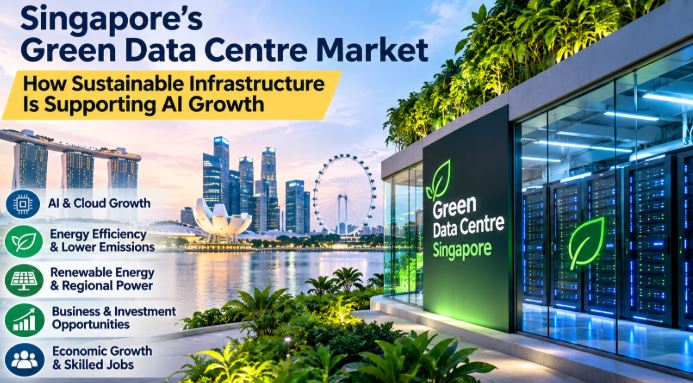
Growing demand for artificial intelligence and cloud computing is driving investment in Singapore’s data centre industry. As businesses look for more computing capacity, the country is focusing on energy-efficient infrastructure, cleaner power and sustainable technologies to strengthen its position as a leading digital business hub in Asia.
Singapore is strengthening its position in the global digital economy as rising demand for artificial intelligence (AI), cloud computing and online services creates new opportunities for the data centre industry.
From international technology companies to cloud service providers and financial institutions, businesses increasingly depend on data centres to store information, operate digital platforms and support complex computing activities.
However, this growing demand is also creating challenges for Singapore. Data centres require significant amounts of electricity, cooling systems and physical space, while the country faces limitations in land and domestic renewable energy resources.
To address these challenges, Singapore is taking a more sustainable approach to digital infrastructure development. Instead of focusing only on increasing data centre capacity, the government and industry are encouraging investment in energy-efficient facilities, advanced cooling technologies and lower-carbon electricity sources.
This approach is creating opportunities for technology companies, infrastructure investors, engineering businesses and clean energy providers.
Why Singapore Is Investing in Green Data Centres
Singapore has become an important location for data centres because of its strong digital connectivity, stable business environment and position as a regional technology and financial hub.
Major cloud providers, technology companies and international businesses depend on reliable digital infrastructure to support their operations across Southeast Asia.
The rapid growth of AI is increasing this demand further. AI applications require substantial computing power, particularly when companies train large models, process information and run AI-powered services.
This is putting additional pressure on data centre operators to expand their facilities while managing electricity consumption and operating costs.
The Singapore Green Data Centre Roadmap, introduced by the Infocomm Media Development Authority (IMDA) in 2024, reflects the country’s effort to balance digital growth with environmental responsibility.
The roadmap aims to support at least 300 MW of additional data centre capacity in the near term, while encouraging higher energy efficiency and sustainable infrastructure.
For businesses, this creates a market where investment opportunities are increasingly connected to energy performance and environmental standards.
AI Growth Is Creating New Demand for Data Centre Infrastructure
Artificial intelligence is changing the requirements of modern data centres.
Traditional data centres were primarily designed to support cloud storage, websites, enterprise applications and conventional computing workloads. AI systems, particularly those used for advanced training and processing, can require much higher computing capacity.
This means operators need more powerful servers, specialised chips, advanced electrical systems and improved cooling infrastructure.
As a result, companies are investing in facilities designed to support high-density computing and demanding AI workloads.
Liquid cooling is one technology receiving greater attention because it can help manage the heat generated by powerful computing equipment.
For infrastructure developers, this creates opportunities to supply cooling equipment, power management systems, specialised electrical components and advanced data centre engineering services.
The growth of AI is therefore creating demand not only for additional data centre buildings but also for a wider range of supporting technologies.
Sustainability Is Becoming a Business Priority
One of the biggest challenges facing Singapore’s data centre industry is electricity consumption.
As computing requirements increase, operators must find ways to manage energy use without affecting the performance and reliability of their facilities.
Power Usage Effectiveness (PUE) is one of the important measurements used to assess data centre energy efficiency. It compares the total energy consumed by a facility with the energy used by its IT equipment.
A lower PUE generally indicates more efficient infrastructure.
Singapore’s green data centre initiatives encourage operators to adopt better cooling systems, efficient equipment and improved facility management practices.
Businesses are also exploring ways to use renewable electricity and other lower-carbon energy sources to reduce the environmental impact of their operations.
This is making sustainability an important consideration in investment decisions.
For data centre operators, efficient energy management can help control long-term operating costs. For investors and technology suppliers, it creates opportunities in green infrastructure, energy management and sustainable engineering.
New Business Opportunities for Technology and Infrastructure Companies
The expansion of Singapore’s green data centre market is creating commercial opportunities across several industries.
1. Data Centre Construction and Engineering
Companies involved in construction, electrical infrastructure, cooling systems and facility management could benefit from demand for new and upgraded data centre facilities.
2. Renewable Energy and Power Solutions
The need for cleaner electricity is creating opportunities for renewable energy developers, power infrastructure companies and businesses involved in energy storage.
Singapore’s limited domestic renewable energy potential also makes regional electricity cooperation and cross-border clean power arrangements increasingly important.
3. Cooling and Energy-Efficient Technologies
Businesses developing liquid cooling systems, advanced air-conditioning technologies and energy management software can benefit from the growing need to improve data centre efficiency.
4. AI and Cloud Computing Services
Technology companies providing cloud infrastructure, AI computing services, data management and enterprise software can benefit from the expansion of digital infrastructure.
5. Industrial Equipment and Maintenance
Data centres require specialised equipment, regular maintenance and reliable technical support. This creates opportunities for engineering firms, equipment suppliers and service providers.
These developments show that the economic benefits of data centre investment extend well beyond the companies operating the facilities.
How Green Data Centres Can Support Singapore’s Economic Growth
The development of sustainable data centres could become an important contributor to Singapore’s long-term economic growth.
As international technology companies expand their digital operations, demand for infrastructure, engineering, energy and technology services is likely to increase.
New investment in data centres can support construction activity, attract international businesses and create demand for specialised suppliers.
It can also strengthen Singapore’s position as a regional hub for cloud computing, financial technology, artificial intelligence and digital services.
Another important economic benefit is the development of a wider technology ecosystem.
Data centre projects require cooperation between infrastructure developers, software companies, engineering firms, energy providers and telecommunications businesses. This creates opportunities for local suppliers and service providers to participate in large-scale projects.
The expansion of AI infrastructure could also encourage research and development, support technology entrepreneurship and attract skilled professionals.
For Singapore, the objective is not simply to build more data centres. It is to develop a competitive digital infrastructure industry that supports higher-value economic activities.
Regional Cooperation Is Important for Future Growth
Singapore’s limited land and renewable energy resources mean that sustainable data centre expansion cannot depend entirely on domestic infrastructure.
Regional cooperation is therefore becoming an important part of its long-term strategy.
Cross-border electricity connections and renewable energy imports could help Singapore access cleaner power while supporting the development of regional energy infrastructure.
Neighbouring Southeast Asian markets may also benefit from this development through investment in renewable energy projects, electricity transmission and supporting infrastructure.
This creates commercial opportunities for energy developers, engineering companies and businesses involved in regional power systems.
Closer cooperation could strengthen Singapore’s position as a digital infrastructure hub while supporting wider economic development across Southeast Asia.
Challenges Facing the Green Data Centre Industry
Despite the growth opportunities, the sector faces several challenges.
Electricity availability remains one of the most important concerns. AI and cloud computing are increasing power requirements, making reliable and affordable energy essential for data centre operators.
Land availability and construction costs are also important considerations in Singapore’s highly developed economy.
Another challenge is the cost of adopting sustainable technologies. Advanced cooling systems, efficient servers and renewable energy arrangements can require significant upfront investment.
Companies must also manage water consumption, equipment waste, cybersecurity and operational reliability.
For smaller technology and engineering businesses, entering the data centre supply chain may require specialised expertise and substantial investment.
Addressing these challenges will be important if Singapore wants to expand its digital infrastructure without placing excessive pressure on its energy and environmental resources.
What Lies Ahead for Singapore’s Green Data Centre Market?
The future of Singapore’s data centre industry will be closely connected to the growth of artificial intelligence, cloud computing and digital business services.
As companies increasingly adopt AI across finance, healthcare, manufacturing, logistics and other industries, demand for reliable computing infrastructure is expected to remain important.
This will encourage continued investment in efficient data centres, advanced cooling systems, renewable energy and intelligent infrastructure management.
For businesses, the opportunity extends beyond operating data centres. Companies involved in construction, engineering, clean energy, software and equipment supply can all participate in the expanding market.
Singapore’s approach also highlights an important development in the global technology industry: digital growth and environmental sustainability are becoming increasingly connected.
Ultimately, green data centres are becoming an important part of Singapore’s economic and technology strategy. By combining AI infrastructure investment with energy efficiency and sustainable power solutions, the country is working to strengthen its digital economy, attract international investment and create new business opportunities across Southeast Asia.