

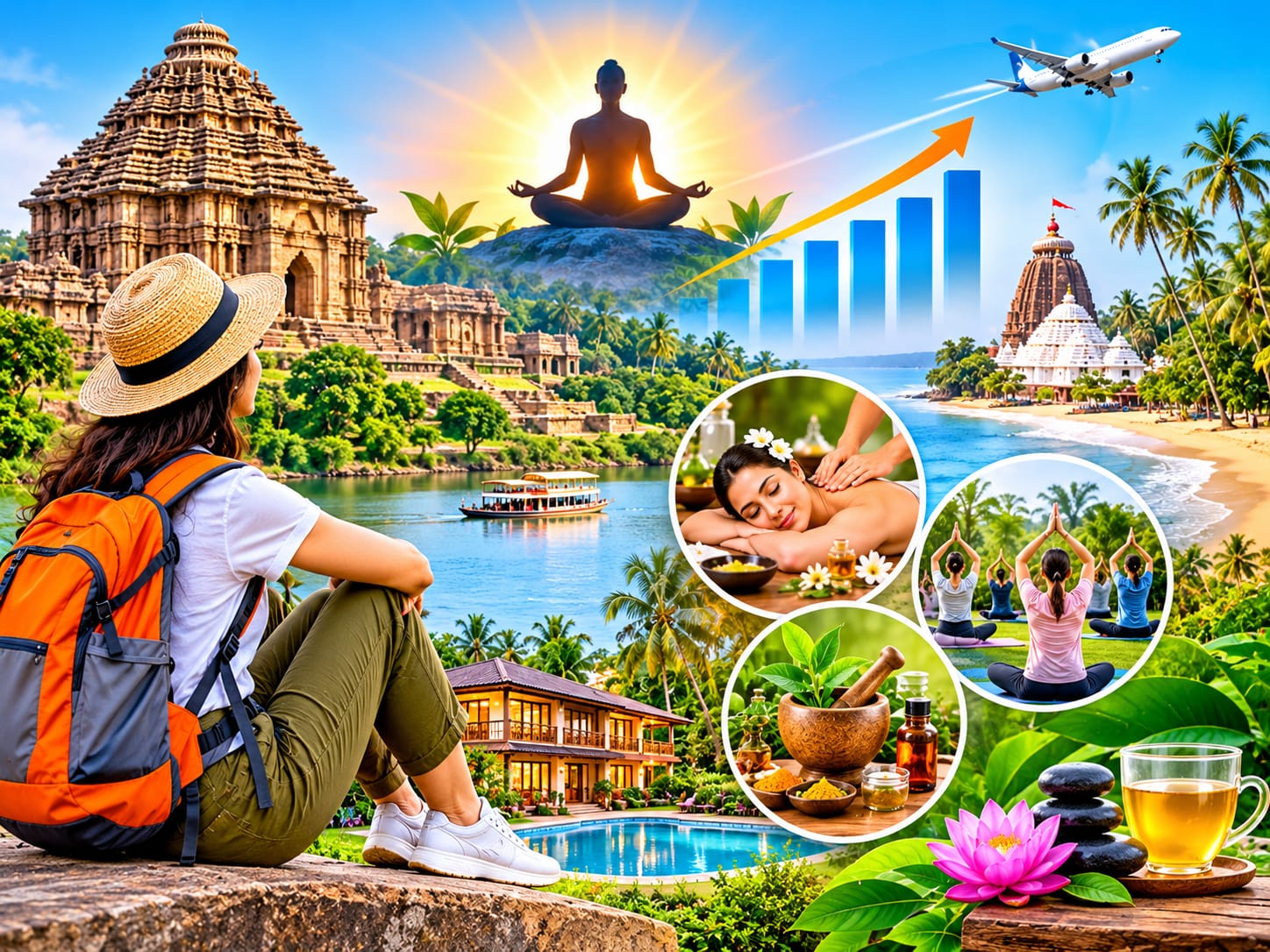
Nov 25: India is emerging as a prominent destination in the global wellness tourism market, supported by its rich heritage of Ayurveda, yoga, meditation, spiritual traditions and diverse natural landscapes. As travellers increasingly seek experiences beyond conventional sightseeing, demand is growing for wellness-focused holidays that promote relaxation, physical health and mental well-being. This shift is driving interest in yoga retreats, Ayurveda therapies, naturopathy, digital detox programmes and nature-based stays.
For India’s tourism and hospitality industry, this trend presents significant business opportunities. Hotels, resorts, retreat centres and tour operators can attract domestic and international travellers through authentic, personalised and sustainable wellness experiences. By combining traditional knowledge with modern hospitality standards, India can strengthen its global competitiveness and establish wellness tourism as an important driver of tourism growth.
India’s Wellness Tourism Market: Growth and Opportunities
India’s wellness tourism market is gaining momentum as travellers increasingly prioritise preventive healthcare, stress management and lifestyle improvement. According to Mordor Intelligence, the market is estimated at USD 30.95 billion in 2026 and is projected to reach USD 47.51 billion by 2032, registering a CAGR of 7.45%. The Global Wellness Institute, using a different measurement approach, estimates India’s wellness tourism expenditure at USD 21.7 billion in 2025, with approximately 197.2 million wellness tourism trips. These figures reflect different methodologies and should not be directly compared.
Growth is driven by rising disposable incomes, greater health awareness and demand for experience-based travel. International visitors are attracted by India’s Ayurveda, yoga and spiritual heritage, while domestic travellers increasingly seek wellness breaks to manage stress and improve their quality of life. This creates significant opportunities for India’s tourism and hospitality businesses.
The Shift Towards Meaningful Travel
The concept of meaningful travel is becoming central to the future of wellness tourism. Rather than focusing exclusively on luxury accommodation or sightseeing, travellers increasingly seek experiences that offer personal value and a deeper connection with the destination.
Meaningful travel may involve learning yoga from experienced practitioners, participating in meditation sessions, understanding local food traditions, spending time in nature, engaging with local communities or adopting healthier daily habits. These experiences can make a holiday more memorable because they connect travel with personal development and well-being.
The growing popularity of meaningful travel reflects several changes in consumer behaviour. Urban lifestyles, long working hours, digital dependence and rising stress levels have encouraged people to look for opportunities to disconnect from everyday pressures. Travellers are also becoming more interested in experiences that support long-term lifestyle changes rather than providing only temporary relaxation.
For hospitality businesses, this shift creates an opportunity to move beyond selling rooms and conventional holiday packages. Hotels and resorts can develop programmes that combine accommodation, nutrition, movement, mindfulness, nature and cultural experiences. The focus is increasingly on the overall quality and purpose of the guest experience.
Ayurveda, Yoga and Traditional Indian Wellness Systems
India’s traditional wellness systems are a major competitive advantage in the global wellness tourism market. Ayurveda, yoga, meditation and naturopathy attract domestic and international travellers seeking holistic well-being and preventive health experiences. Kerala has established a strong reputation for Ayurveda tourism through specialised centres and resorts offering traditional therapies, lifestyle programmes and personalised wellness stays. Similarly, Rishikesh has gained international recognition for yoga, meditation and spiritual retreats, combining wellness practices with cultural and natural experiences.
Growing interest in naturopathy and holistic wellness is creating further opportunities through programmes focused on nutrition, physical activity, relaxation and nature-based experiences. However, long-term market credibility depends on qualified practitioners, consistent service standards, transparent information and responsible health claims. Maintaining safety and authenticity will be essential for strengthening India’s position as a trusted global wellness destination.
Emerging Wellness Tourism Segments
Yoga and meditation retreats remain a major segment of India’s wellness tourism market, accounting for an estimated 40.76% of the relevant market category. Their popularity is driven by India’s strong yoga heritage and growing global demand for mindfulness, relaxation and stress management. Digital detox tourism is also gaining momentum, with an estimated CAGR of 17.6%, as travellers seek device-free experiences through nature walks, meditation and outdoor activities.
Eco-wellness lodges represent another emerging opportunity, with an estimated CAGR of 19.5%. These properties combine sustainable accommodation, natural surroundings, locally sourced food and wellness activities. Other growing segments include sleep retreats, healthy culinary experiences, fitness holidays and personalised wellness programmes. Together, these offerings enable hospitality businesses to target diverse traveller preferences and develop differentiated tourism products.
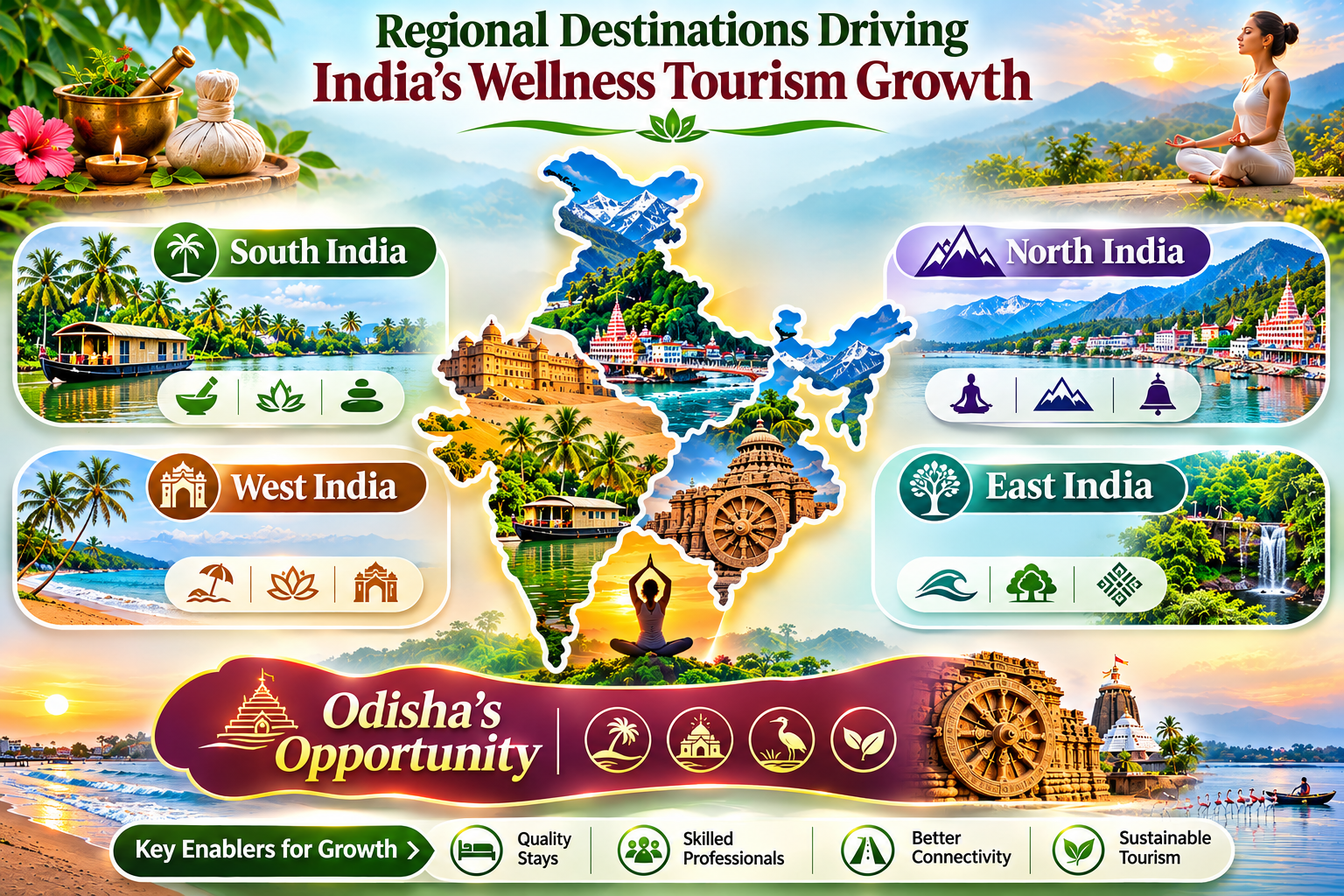
Regional Destinations Driving India’s Wellness Tourism Growth
India’s wellness tourism market is supported by diverse regional strengths, with each region offering distinct natural, cultural and therapeutic experiences.
- South India: Leading the market with an estimated 48.38% share, the region benefits from Kerala’s Ayurveda resorts, Karnataka’s wellness retreats and Tamil Nadu’s yoga and naturopathy centres.
- North India: Uttarakhand, Rishikesh, Haridwar and Himachal Pradesh attract visitors through yoga, meditation, spiritual heritage and Himalayan landscapes.
- West India: Goa and Maharashtra offer coastal wellness resorts, yoga retreats and spa experiences, while Rajasthan combines heritage hospitality with traditional food and cultural experiences.
- East India: Odisha and other eastern destinations have emerging potential through beaches, forests, tribal heritage and nature-based wellness experiences.
Odisha’s Opportunity: Destinations such as Puri, Konark and Chilika can develop distinctive wellness products by combining coastal retreats, local cuisine, cultural experiences and nature-based activities. Investment in quality accommodation, trained professionals, connectivity and sustainable tourism infrastructure will be essential to strengthen regional competitiveness.
The Role of Hotels and Hospitality Businesses
Wellness tourism is encouraging hotels and resorts to move beyond conventional spa facilities and offer integrated experiences that support guests’ physical and mental well-being. Travellers increasingly expect personalised programmes combining yoga, meditation, healthy cuisine, fitness, relaxation and cultural activities.
Leading hospitality brands such as Ananda in the Himalayas, Six Senses Vana, CGH Earth and IHCL’s J Wellness Circle demonstrate how wellness can be incorporated into different hospitality models, from specialised retreats to luxury resorts and mainstream hotels.
Key business opportunities include:
- Higher Revenue: Premium wellness packages and specialised services can increase guest spending.
- Longer Stays: Multi-day retreats encourage extended accommodation bookings.
- Repeat Business: Personalised wellness experiences can build guest loyalty.
- New Market Segments: Corporate retreats, family wellness holidays and seasonal programmes can attract diverse customers.
- Brand Differentiation: Integrated wellness offerings help hotels stand out in a competitive hospitality market.
Government Initiatives and Institutional Support
Government support is important for developing India’s medical and wellness tourism industry. The Ministry of Tourism’s National Strategy and Roadmap for Medical and Wellness Tourism, released in 2022, provides a framework for improving India’s position as a destination for health-related travel.
The introduction of the AYUSH Visa category in 2023 was another significant step. It aims to facilitate international visitors travelling to India for treatment and services associated with traditional Indian systems of medicine, including Ayurveda, yoga and other recognised AYUSH systems.
Other tourism development initiatives, including Swadesh Darshan 2.0 and the PRASHAD scheme, contribute to destination development, infrastructure and visitor facilities. While these programmes are not exclusively focused on wellness tourism, improvements in connectivity, public amenities and destination management can strengthen the wider tourism ecosystem.
Continued coordination between tourism authorities, state governments, healthcare institutions, hospitality businesses and local communities will be necessary. Clear standards, reliable information and effective promotion can help build confidence among international visitors.
Sustainability and Responsible Wellness Tourism
Sustainability is becoming increasingly important as wellness travellers look for destinations that support both personal well-being and environmental responsibility. Natural surroundings are often central to the wellness experience, making environmental protection a commercial as well as an ethical priority.
Wellness resorts and retreat centres can reduce their environmental footprint through energy-efficient buildings, water conservation, waste management, local sourcing and responsible use of natural resources. Properties located near forests, rivers, beaches and other sensitive ecosystems must ensure that tourism activity does not damage the landscapes that attract visitors.
Community participation is equally important. Employing local residents, purchasing regional products, supporting traditional crafts and working with local food producers can help distribute tourism benefits more widely. Cultural experiences should be developed respectfully, with local communities involved in decisions about how their traditions are represented.
Responsible wellness tourism should also avoid exaggerated health claims and misleading descriptions of traditional practices. Transparent pricing, qualified professionals, appropriate hygiene standards and clear guest information are essential components of a trustworthy industry.
Key Challenges Facing India’s Wellness Tourism Industry
- Service Quality: Inconsistent standards, facilities and customer service can affect visitor satisfaction and destination credibility.
- Skilled Workforce: Shortages of qualified Ayurveda practitioners, yoga instructors, therapists and trained hospitality professionals.
- Infrastructure and Accessibility: Limited transport connectivity, quality accommodation and healthcare facilities in emerging destinations.
- Seasonality: Fluctuating tourist demand can affect occupancy and revenue throughout the year.
- Affordability: Balancing premium wellness experiences with accessible packages for domestic and budget-conscious travellers.
- Global Competition: Strengthening India’s position against established wellness destinations through professional services, modern facilities and authentic experiences.
The Future of Wellness Tourism in India
The future of India’s wellness tourism industry will depend on combining traditional wellness practices with modern traveller expectations. Growing demand for personalised programmes, preventive wellness, nature-based accommodation and meaningful experiences presents opportunities for hospitality businesses to strengthen their market position. Technology, including digital booking platforms and personalised travel solutions, can further enhance guest convenience and service delivery while retaining the human connection central to wellness experiences.
The development of integrated wellness destinations combining accommodation, Ayurveda, yoga, healthy cuisine, nature and cultural experiences can create greater value for travellers while supporting local businesses and communities. For hotels and resorts, this offers opportunities to differentiate their offerings, increase guest stays and encourage repeat visits. Emerging destinations such as Odisha can also leverage their natural landscapes, cultural heritage and local cuisine to develop distinctive wellness tourism products and expand their tourism economy.
Conclusion
India’s wellness tourism industry presents a strong growth opportunity, driven by rising demand for meaningful travel, preventive wellness and authentic experiences. Its strengths in Ayurveda, yoga, meditation and nature-based hospitality provide a distinctive competitive advantage. For hotels, resorts, investors and destination developers, the sector offers opportunities to diversify revenue, attract higher-value travellers and encourage repeat visits. Sustained growth, however, will depend on service quality, skilled professionals, infrastructure and sustainable practices. By combining its traditional wellness heritage with modern hospitality standards, India can strengthen its position as a leading global wellness tourism destination.