

In this story
India’s pharmaceutical manufacturing industry is undergoing a significant transformation. Once recognised primarily for its ability to produce affordable generic medicines, the country is steadily expanding its role as a global pharmaceutical powerhouse driven by quality excellence, technological advancement, and scientific innovation.
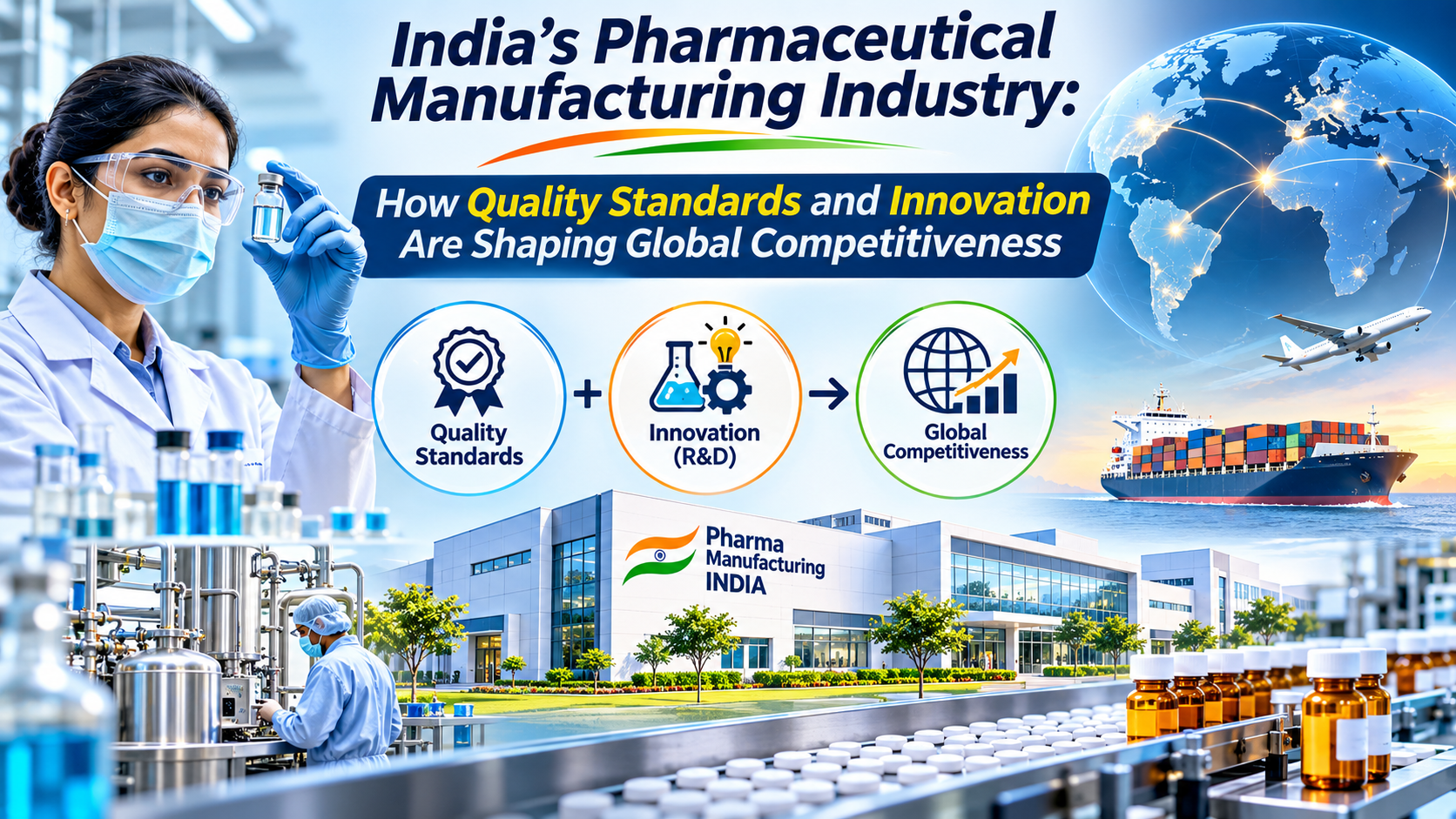
Today, Indian pharmaceutical manufacturers serve healthcare markets across the world, supplying essential medicines, vaccines, active pharmaceutical ingredients (APIs), and specialised formulations. Their contribution goes beyond affordability; it plays an important role in strengthening global medicine accessibility and healthcare supply chains.
However, the expectations of the international pharmaceutical market are changing. Competitive pricing alone is no longer enough to establish a strong global presence. Manufacturers must demonstrate consistent product quality, regulatory compliance, operational transparency, and the ability to develop innovative pharmaceutical solutions.
This shift is encouraging Indian pharmaceutical companies to rethink traditional manufacturing approaches and invest in advanced technologies, stronger quality management systems, and research-driven product development. The combination of these capabilities is shaping India’s next phase of growth in the global pharmaceutical landscape.
From Affordable Medicines to Global Manufacturing Excellence
India’s pharmaceutical success has been built on its ability to manufacture high-quality medicines at competitive costs. Its strong generic drug manufacturing ecosystem has made essential treatments more accessible across developing and developed markets.
Yet, the industry’s ambitions are expanding beyond volume-based manufacturing. Companies are increasingly focusing on complex generics, specialty formulations, biosimilars, and high-value pharmaceutical products.
This transition represents an important change in India’s global positioning. Manufacturers are no longer competing only on production costs but also on technological capabilities, product reliability, regulatory performance, and innovation.
A skilled pharmaceutical workforce, established manufacturing infrastructure, and growing domestic research capabilities provide a strong foundation for this transformation.
Quality Standards: The Foundation of Global Trust
In pharmaceutical manufacturing, quality is not simply a regulatory requirement; it is the foundation of patient safety and business credibility.
Even minor inconsistencies in manufacturing, raw materials, storage conditions, or packaging can affect the safety and effectiveness of medicines. This makes a robust quality management system essential at every stage of production.
Indian pharmaceutical manufacturers are increasingly strengthening their processes through Good Manufacturing Practices (GMP), quality risk management, process validation, and systematic documentation.
Key areas of quality management include:
-
Raw material control: Ensuring that active ingredients and other materials meet established specifications before entering production.
-
Process validation: Demonstrating that manufacturing processes consistently deliver products meeting predetermined quality requirements.
-
Environmental monitoring: Maintaining appropriate conditions in manufacturing areas to minimise contamination risks.
-
Quality testing: Conducting chemical, physical, and microbiological assessments at relevant production stages.
-
Documentation and traceability: Maintaining reliable records that support accountability and regulatory inspections.
-
Stability studies: Evaluating how medicines maintain their quality throughout their intended shelf life.
For Indian manufacturers targeting international markets, compliance with applicable GMP requirements and regulatory expectations is essential. Strong quality systems help build confidence among regulators, healthcare providers, distributors, and international business partners.
Regulatory Compliance as a Competitive Advantage
Global pharmaceutical markets operate under different regulatory frameworks, and manufacturers must understand and comply with the requirements of their target markets.
Regulatory organisations such as the United States Food and Drug Administration (USFDA), European Medicines Agency (EMA), and World Health Organization (WHO) play important roles in establishing and evaluating pharmaceutical quality and safety requirements.
For Indian companies, regulatory compliance should be viewed as an ongoing business capability rather than an activity performed only before inspections.
A well-developed compliance culture involves regular internal audits, employee training, effective deviation management, corrective and preventive actions (CAPA), and continuous monitoring of manufacturing performance.
It also requires manufacturers to identify the root causes of quality issues instead of relying on temporary corrective measures.
Companies that build strong regulatory systems can improve operational reliability, reduce compliance risks, and strengthen their position in highly regulated international markets.
Ultimately, regulatory excellence is becoming an important differentiator in an increasingly competitive pharmaceutical industry.
Smart Manufacturing: How Technology Is Reshaping Production
Technology is changing how pharmaceutical products are developed, manufactured, tested, and monitored.
Indian manufacturers are increasingly exploring digital manufacturing systems that provide better control over production activities while reducing inefficiencies and manual intervention.
Some of the most significant technological developments include:
Artificial Intelligence and Machine Learning
AI-based systems can analyse manufacturing data, identify unusual patterns, support predictive maintenance, and assist in optimising production processes. These applications can help manufacturers detect potential problems earlier and improve operational decision-making.
Automation and Robotics
Automated equipment can improve production consistency, reduce repetitive manual activities, and support precise handling of materials. Robotics can also contribute to controlled manufacturing environments where minimising human intervention is important.
Internet of Things (IoT)
Connected sensors can monitor critical parameters such as temperature, humidity, pressure, and equipment performance. Real-time monitoring helps manufacturers maintain controlled conditions and respond quickly to deviations.
Digital Quality Management Systems
Electronic documentation, digital batch records, and automated workflows can improve data accessibility, traceability, and documentation accuracy when implemented with appropriate validation and controls.
Advanced Process Analytical Technology (PAT)
PAT supports the monitoring and understanding of manufacturing processes through timely measurements of critical quality attributes and process parameters. This can help manufacturers improve process control and product consistency.
The adoption of these technologies is helping pharmaceutical companies move towards more intelligent, data-driven manufacturing environments.
Research and Development: Moving Beyond Traditional Generics
One of the most important opportunities for India’s pharmaceutical industry lies in strengthening its research and development capabilities.
Generic medicines have established India’s international reputation, but the next stage of growth will increasingly depend on developing products that offer greater technological and scientific complexity.
Companies are exploring opportunities in:
-
Complex generic formulations.
-
Biosimilars and biopharmaceutical products.
-
Novel drug delivery systems.
-
Specialised therapeutic formulations.
-
Improved drug stability and bioavailability.
-
Advanced injectable and sterile products.
Research and development can also help manufacturers address unmet medical needs and create differentiated products for specialised patient populations.
Collaboration between pharmaceutical companies, universities, biotechnology firms, and research institutions can accelerate innovation by combining scientific expertise with practical manufacturing capabilities.
Greater investment in research will allow Indian manufacturers to strengthen their intellectual property portfolios and move towards higher-value pharmaceutical products.
Strengthening Domestic API Manufacturing and Supply Chain Resilience
A pharmaceutical product is only as reliable as the quality and availability of the materials used to manufacture it.
Active Pharmaceutical Ingredients (APIs) are the substances responsible for the therapeutic action of medicines. Their availability, purity, and consistency are therefore critical to pharmaceutical manufacturing.
India has developed substantial formulation manufacturing capabilities, but dependence on imported APIs and key starting materials for certain products has highlighted the importance of strengthening domestic production.
Government initiatives such as the Production Linked Incentive (PLI) Scheme for pharmaceuticals and bulk drugs, along with the development of bulk drug parks, aim to encourage domestic manufacturing capacity.
A stronger API ecosystem can help the industry:
-
Reduce exposure to international supply disruptions.
-
Improve access to critical raw materials.
-
Strengthen domestic manufacturing capabilities.
-
Support better supply chain planning.
-
Improve long-term production stability.
Building resilient supply chains is not only an economic priority but also an important requirement for maintaining India’s role as a dependable global pharmaceutical supplier.
Sustainability and Responsible Pharmaceutical Manufacturing
As global attention shifts towards environmental responsibility, sustainability is becoming an important consideration for pharmaceutical manufacturers.
Pharmaceutical production involves energy consumption, water usage, chemical processing, and waste generation. Poorly managed industrial waste can create environmental risks and affect the reputation of manufacturing organisations.
Indian pharmaceutical companies are increasingly recognising the importance of integrating sustainable practices into their operations.
Some important areas of focus include:
-
Efficient water consumption and wastewater treatment.
-
Responsible disposal and management of pharmaceutical waste.
-
Energy-efficient manufacturing equipment.
-
Reduction of avoidable material wastage.
-
Environmentally responsible sourcing.
-
Monitoring environmental performance across manufacturing facilities.
Sustainable manufacturing can improve resource efficiency while supporting long-term operational resilience.
It also helps pharmaceutical companies respond to the growing environmental expectations of international customers, investors, and supply chain partners.
Key Challenges That Could Influence India’s Global Competitiveness
Despite its considerable strengths, India’s pharmaceutical manufacturing industry faces several challenges that require continuous attention.
Maintaining Consistent Quality Across Facilities: As manufacturing capacity expands, companies must ensure that quality systems remain effective across every production unit and product category.
Rising Compliance Expectations: Regulatory requirements are becoming increasingly complex, making continuous investment in employee training, documentation, infrastructure, and quality systems necessary.
High Innovation Costs: Developing complex formulations and innovative medicines requires substantial capital, scientific expertise, and long-term research commitments.
Supply Chain Vulnerabilities: Dependence on imported raw materials and intermediates can expose manufacturers to price fluctuations, geopolitical uncertainty, and supply disruptions.
Technology Adoption: Implementing automation, digital quality systems, and advanced manufacturing technologies can be challenging, particularly for smaller manufacturers with limited financial resources.
Global Competition: Pharmaceutical manufacturing hubs worldwide are investing in advanced technologies, infrastructure, and research, increasing competitive pressure on Indian companies.
Addressing these challenges through strategic investment, stronger governance, technological modernisation, and industry collaboration will be essential for sustainable growth.
What Will Define the Next Phase of India’s Pharmaceutical Industry?
The future of Indian pharmaceutical manufacturing will be determined by how effectively the industry combines quality, innovation, technology, and manufacturing efficiency.
Several emerging developments are likely to influence its growth.
First, complex generics and biosimilars can create opportunities for manufacturers seeking to move into higher-value product segments.
Second, digital manufacturing and data-driven quality management can improve operational visibility and production consistency.
Third, investment in domestic API manufacturing can strengthen supply chain resilience and reduce exposure to external disruptions.
Finally, stronger collaboration between industry, research institutions, and government organisations can accelerate innovation and support the development of advanced pharmaceutical products.
The industry will also need to invest in skilled professionals who understand modern manufacturing technologies, regulatory expectations, data integrity, and quality management.
The companies that successfully integrate these capabilities will be better positioned to compete in demanding international markets.
Conclusion
India’s pharmaceutical manufacturing industry is entering a new phase of global growth, where competitiveness will depend on much more than affordable production. Quality assurance, regulatory excellence, technological modernisation, research investment, and sustainable manufacturing are becoming essential pillars of long-term success.
The country’s established strengths in generic medicines and pharmaceutical exports provide a solid foundation. However, moving towards advanced formulations, complex generics, biosimilars, and innovation-led manufacturing will be crucial to strengthening its international position.
For pharmaceutical manufacturers, the real opportunity lies in building an ecosystem where quality is embedded in every process and innovation is part of everyday business strategy.
As global healthcare demands continue to evolve, India’s ability to combine affordability with reliability, scientific advancement, and manufacturing excellence will determine how strongly it competes in the pharmaceutical markets of tomorrow.