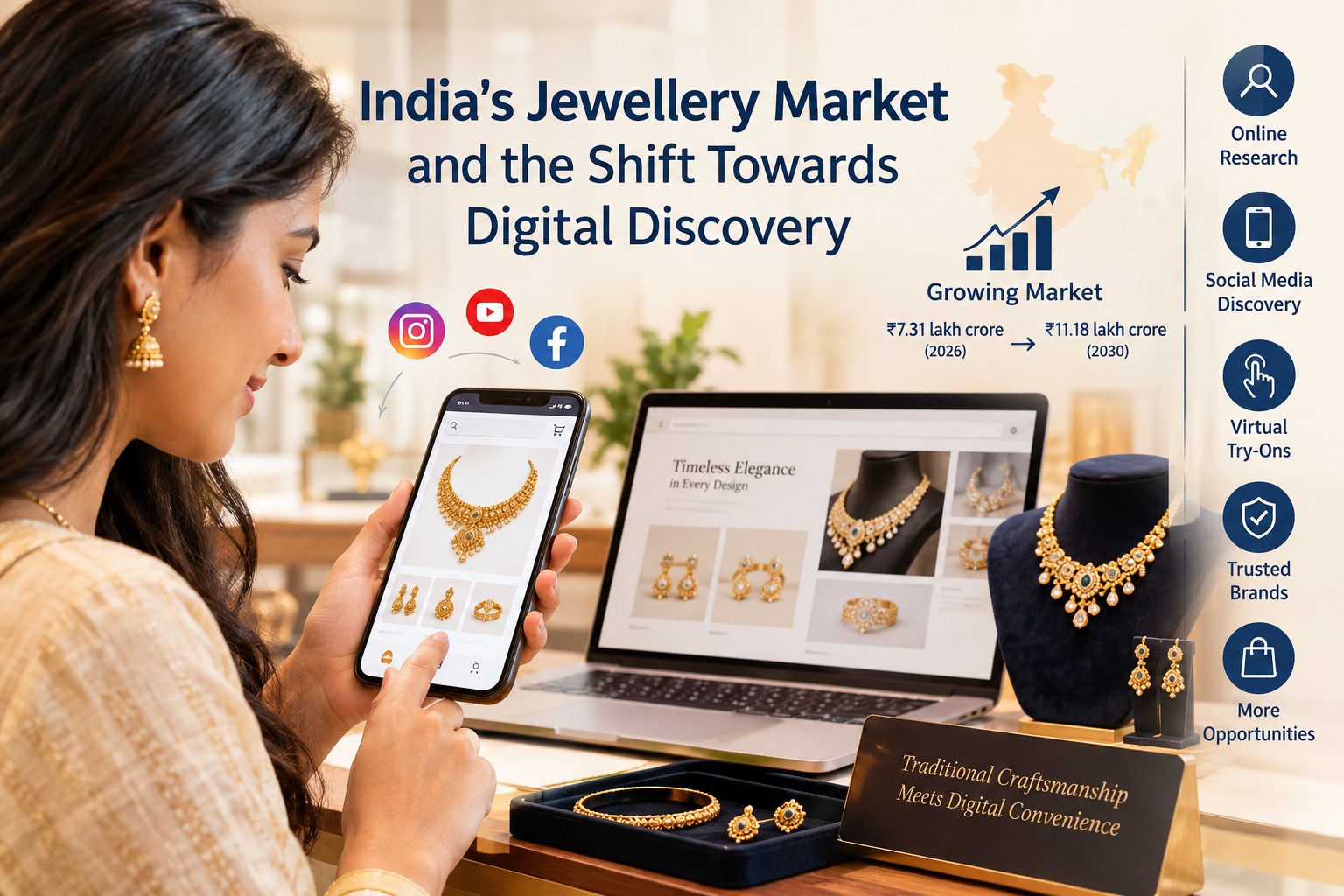
India’s jewellery market is changing as more consumers turn to digital platforms to explore designs, compare prices and discover brands before visiting a store. While buying jewellery remains a personal decision, smartphones and social media are increasingly shaping what customers see, consider and eventually purchase.
India’s gems and jewellery market was valued at approximately ₹7.31 lakh crore ($85 billion) in January 2026 and is projected to reach ₹11.18 lakh crore ($130 billion) by 2030. The sector supports nearly five million jobs, making the shift towards digital shopping an important development for retailers, manufacturers, artisans and technology businesses.
Online Discovery Comes First
Jewellery shopping once began with a visit to a trusted local jeweller. Today, many customers start by browsing online collections, checking gold prices and comparing designs on social media.
This change gives retailers an opportunity to connect with customers before they enter a showroom. Clear product images, accurate descriptions and quick responses to enquiries can help turn online interest into store visits and sales.
Online Sales Create Growth
Digital platforms are helping jewellery businesses reach customers beyond their local markets. An industry estimate valued India’s online jewellery market at around ₹26,200 crore in 2024, with projections suggesting it could reach ₹74,300 crore by 2029.
For independent jewellers and emerging designers, online catalogues offer a way to showcase collections across cities without the expense of opening multiple stores. Established retailers can use digital channels to encourage repeat purchases and understand changing customer preferences.
Affordable Designs Gain Appeal
Rising gold prices are encouraging consumers to pay closer attention to jewellery weight, design and overall cost. According to figures cited from the World Gold Council, India’s gold jewellery demand fell 15% year-on-year to 75 tonnes in the second quarter of 2026, even as its value rose 26% to $21 billion.
The trend creates opportunities for lightweight chains, everyday earrings, minimalist rings and other designs suited to different budgets. Retailers that clearly display product weight, making charges and specifications can help shoppers make more confident decisions.
Social Media Builds Brands
Instagram-style visual platforms, short videos and creator collaborations are giving smaller jewellery brands greater visibility. Customers can discover new designs, see how pieces look when worn and contact sellers directly.
For regional jewellers and independent designers, this offers a relatively accessible way to reach new audiences. However, attractive content must be supported by reliable product information, transparent pricing and responsive customer service to generate actual sales.
Virtual Try-Ons Improve Shopping
Virtual try-on tools allow customers to preview selected jewellery designs before making a decision. They can shortlist products online and visit a showroom with a clearer idea of what they want.
This combination of digital convenience and physical inspection can benefit both buyers and retailers. Even businesses without advanced technology can improve the experience through updated online catalogues, messaging services and showroom appointment bookings.
Trust Drives Sales
Buying jewellery requires confidence in quality, purity and value. Customers want clear information about hallmarking, gemstone specifications, making charges, payment security and exchange policies.
Retailers that communicate these details openly can build stronger relationships with first-time buyers. Trust also supports repeat purchases and recommendations, making transparency an important part of long-term business growth.
New Business Opportunities
The growth of digital jewellery discovery is creating demand for product photography, e-commerce services, digital marketing and online catalogue management. These services can help traditional jewellers strengthen their digital presence without investing in every capability themselves.
Smaller businesses can start with simple, cost-effective tools and expand as demand grows. The priority should be to connect online enquiries with available inventory, reliable service and completed sales.
Omnichannel Retail Is the Future
India’s jewellery market is not abandoning physical stores. Instead, online discovery and showroom shopping are increasingly working together.
Retailers that combine digital reach with personal service, transparent pricing and affordable design choices will be better positioned to respond to changing consumer expectations. As the industry evolves, digital discovery is becoming more than a marketing tool—it is an important route to customer engagement, business expansion and long-term growth.