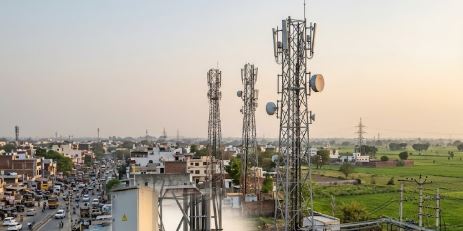
India’s telecom industry is no longer just about connecting people. It has become one of the country’s most important pieces of economic infrastructure, supporting everything from digital payments and e-commerce to manufacturing, financial services, cloud computing and artificial intelligence.
With more than 1.3 billion telephone subscribers and over 1 billion broadband subscribers, India’s telecom market has reached a scale where network expansion increasingly translates into wider business opportunities. The next phase of growth is therefore not simply about adding more users. It is about how companies can use connectivity to create new products, improve productivity and reach customers in markets that were previously difficult to serve.
Connectivity Has Become a Business Essential
For Indian businesses, reliable connectivity has moved from being a support service to a strategic necessity.
A small retailer can accept digital payments, communicate with suppliers and promote products online. A manufacturer can connect machines and monitor production remotely. A logistics company can track vehicles and shipments in real time. Financial institutions can deliver services instantly to customers across cities and villages.
This growing dependence on connectivity is creating demand for telecom infrastructure, data centres, cloud services, cybersecurity, enterprise software and digital platforms.
In other words, every additional layer of India’s digital economy creates another opportunity around the telecom ecosystem.
5G Opens a New Enterprise Market
The rapid expansion of 5G is particularly significant from a business perspective.
India’s 5G services have reached almost the entire country, with government data showing coverage across 99.6 per cent of districts, around 4.69 lakh 5G base stations and approximately 25 crore users by early 2025.
The real commercial opportunity, however, lies beyond faster smartphone internet.
5G can support smart factories, connected machinery, automated warehouses, remote monitoring, intelligent transportation and other industrial applications. For businesses, this means greater scope to reduce downtime, improve operational efficiency and make decisions using real-time data.
This could make enterprise 5G an important growth market for telecom operators and technology companies.
Rural India Could Be the Next Growth Frontier
The industry’s business opportunity also extends far beyond metropolitan markets.
India’s rural economy is increasingly becoming digital, with hundreds of millions of rural subscribers already connected to telecom networks. As smartphone adoption, digital payments and online services expand, rural consumers are becoming an increasingly important market for businesses.
For companies, this creates opportunities in areas such as digital commerce, financial services, education, healthcare, entertainment and agricultural technology.
The next wave of telecom investment could therefore be closely linked to the expansion of India’s smaller cities and rural markets.
From Telecom Operators to a Larger Technology Ecosystem
Another important change is the widening telecom value chain.
The sector now involves much more than mobile network operators. Equipment manufacturers, fibre companies, semiconductor businesses, cloud providers, data centres, software developers, cybersecurity firms and startups are all becoming part of the connectivity economy.
India’s push towards domestic telecom equipment and indigenous technologies could further expand this ecosystem.
The development of indigenous telecom technologies and India’s preparations for the 6G era reflect an ambition to move higher up the technology value chain — from being a major consumer of telecom services to becoming a developer and exporter of telecom solutions.
That shift could create opportunities for Indian manufacturers and technology startups while strengthening domestic intellectual property.
Digital Infrastructure Is Creating New Markets
The connection between telecom and India’s digital public infrastructure is another major business advantage.
Digital payments, e-governance, online financial services and other digital platforms depend on reliable networks. As more economic activity moves online, the value of connectivity rises with it.
For businesses, this creates a multiplier effect. Better networks encourage greater digital adoption, while greater digital adoption creates demand for even better networks and supporting technologies.
This cycle can generate opportunities across the wider technology economy.
Security Will Become a Major Business Priority
Growth, however, also brings risk.
As businesses become more dependent on digital networks, cyber fraud, identity theft, deepfakes and other technology-enabled threats become increasingly costly. Telecom companies and enterprises will therefore need to invest not only in speed and coverage but also in cybersecurity, network resilience and customer protection.
This could itself become a significant market for cybersecurity companies and specialised technology providers.
The Investment Story Is Bigger Than 5G
India’s telecom opportunity should therefore not be measured only by the number of mobile users or 5G towers.
The bigger story is the economic activity that connectivity enables.
Every new tower, fibre connection or broadband subscriber can support businesses that operate above the network — from fintech and e-commerce to cloud computing, AI, logistics and digital manufacturing.
The future of India’s telecom industry will consequently be shaped by a broader question: how effectively can connectivity translate into productivity, investment and new businesses?
India has already built one of the world’s largest telecom markets. The next challenge is to turn that enormous connected base into a stronger engine for enterprise growth, innovation, manufacturing and economic opportunity.
The telecom revolution, in that sense, is only the beginning. The real business story lies in what India builds on top of the network.