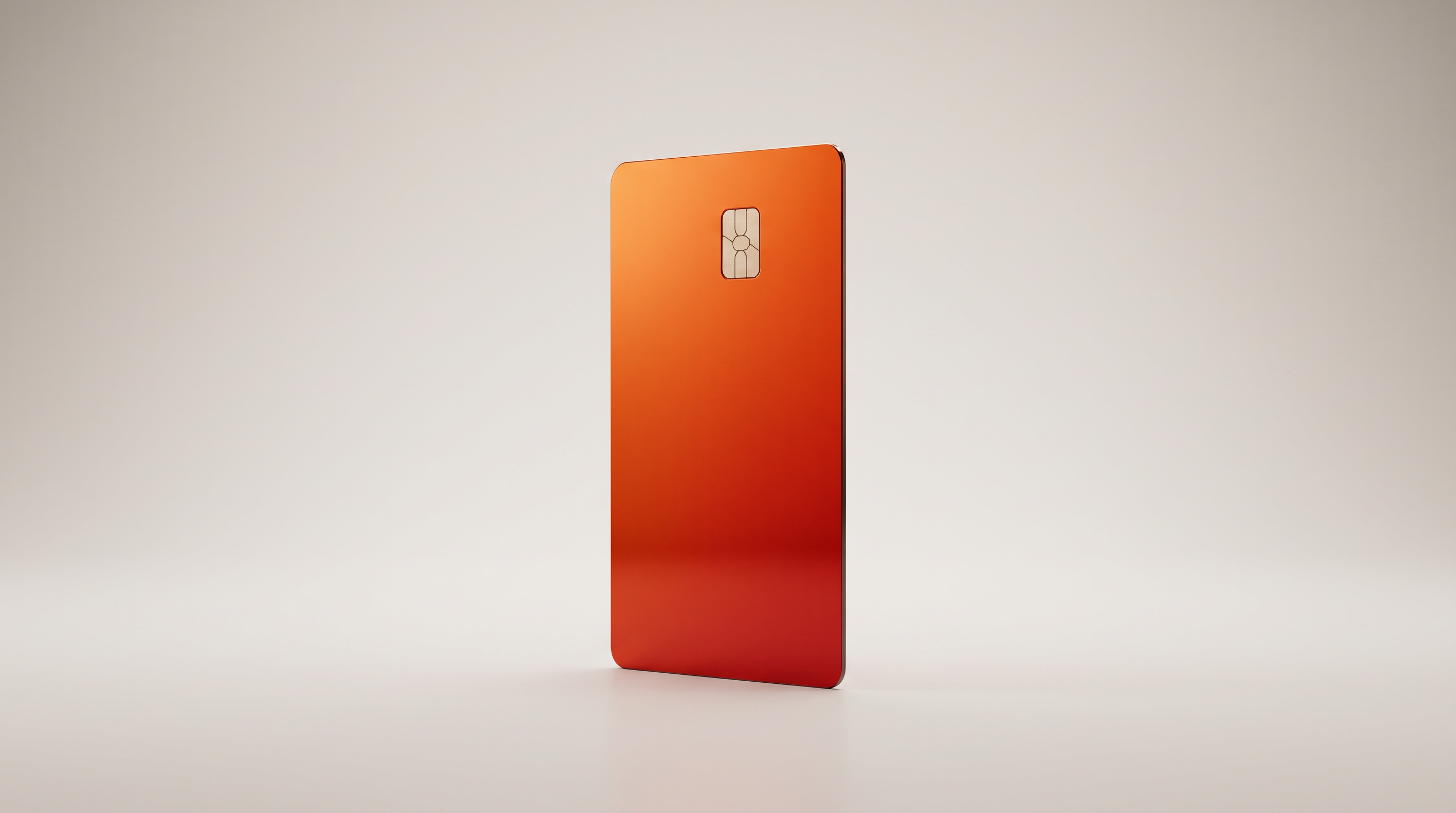
India, Aug 19: As fintechs and digital-first challengers narrow the gap on price and convenience, a growing number of banks are also exploring new target groups. Giesecke+Devrient is expanding its Convego Ceramic payment card line with a wide range of new on-trend colors, including elegant white, bright blue and deep red. It takes the material beyond the black and dark tones that have defined it so far, giving banks a new tool for physical differentiation as they compete with fintechs for affluent customers.
Retail banking is undergoing a recalibration. Fintechs’ combined share of revenue among the world’s largest banks and fintechs rose from 10 % in 2021 to 17 % in 2025, according to McKinsey’s Global Banking Annual Review – evidence, that, according to the report, fintechs are maturing from niche challengers into full-scale competitors for broad customer relationships, not just individual transactions. Facing the competition, many banks are looking past standard segmentation toward more personalized, identity-driven relationships with affluent and aspirational customers.
This group is not easy to win or keep. Ultra-high-net-worth individuals collectively spend USD 280 billion on luxury goods annually, according to analyst Altrata. Also, aspirational consumers pursuing that lifestyle account for a significant share of premium brand purchases.Overall, the global luxury market is projected to reach $700 billion by the end of the decade, growing 4 % to 6 % annually, according to McKinsey consumer research.
For banks, the competition for these customers has less to do with rates or fees, and more with whether customers feel their status is recognized. What better way to reinforce that connection than through a payment card, the most visible link between a customer and their bank?
Ceramic cards: A demanding material gets more color
This is the specific space G+D is addressing with its updated Convego Ceramic line, adding a variety of colorways, including white, blue- and red-toned finishes, to a portfolio that has so far been almost exclusively black. A wide range of additional colors can also be produced. Further customization options, such as laser engraving for background textures and electroplating, are also available. Here, a thin layer of metal is deposited electrochemically onto the ceramic surface, producing a mirror-like, color-shifting effect, giving issuers an additional way to customize a ceramic card.
Already the material itself, with its distinct look, offers a special payment experience. G+D launched the Convego ceramic card in black some time ago as the first payment card on the market made entirely of ceramic, except for its electronic components and antenna.
Creating colored ceramics is easier said than done. Color in fired ceramics is not printed onto the surface; it is produced chemically within the material itself. During firing at high temperatures, many pigments fade or shift in tone. Only compounds combined with stabilizers such as zirconium reliably survive the process without discoloring, which is one reason dark, oxide-based tones have dominated ceramic production.
Achieving stable, repeatable colors at scale still requires significant craftsmanship and specialized manufacturing processes. Zirconia also brings additional benefits: It makes the surface resistant to scratches and enables a mirror-like effect, helping the card maintain its look and feel even after being taken in and out of a wallet many times. G+D’s ceramic cards are particularly distinguished by their high-gloss, durable surface.
“Ceramic in payment cards has been almost synonymous with black. Expanding the palette is a technical achievement that gives banks a genuinely new tool to signal exclusivity and identity,” says Mikko Kähkönen, Head of Payment Cards Portfolio at G+D. “As institutions compete for affluent customers, the physical card is once again becoming a strategic differentiator, one that customers can see, hold, and identify with.”