

In this story
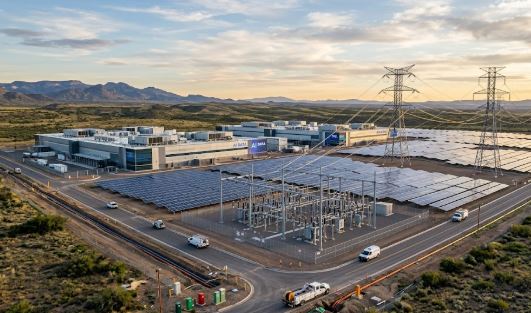
Artificial intelligence is no longer just a technology story about smarter software, chatbots and automated services. In the United States, it is becoming a major infrastructure development story, creating demand for the physical systems that allow AI applications to operate at scale.
Behind every AI-powered search, automated business process and generative AI application is a complex network of computing equipment, data centres, electricity systems, cooling technology and high-speed connectivity. As companies invest in more powerful AI models, the pressure to expand this infrastructure is increasing.
In 2026, this expansion is opening a new chapter for America’s technology economy. While major technology companies remain at the centre of AI investment, a much wider group of businesses is beginning to benefit. Equipment manufacturers, construction contractors, energy providers, engineering companies, networking specialists and software developers are all becoming part of the growing AI supply chain.
The biggest opportunity may not always lie in building the next AI application. It may lie in supplying the infrastructure that makes thousands of applications possible.
The Data Centre Boom Is Changing the Technology Landscape
Data centres have become one of the most important foundations of the AI economy. Unlike traditional computing facilities, AI-focused data centres require powerful processors, specialised servers and advanced systems capable of handling enormous volumes of information.
The expansion is already visible in America’s construction market. According to CBRE’s 2026 North American data centre market assessment, primary-market data centre supply reached a record 10,903 megawatts in the first half of the year, while vacancy fell to 1.4%. This indicates how quickly new capacity is being absorbed by customers seeking computing infrastructure.
For businesses, the development creates opportunities across several areas:
-
Construction and engineering: Data centre projects require specialised contractors, electrical engineers, structural designers and project management services.
-
Equipment manufacturing: Server racks, power distribution units, backup systems and industrial components are essential to facility operations.
-
Security and monitoring: Facilities need advanced physical security, network protection and continuous performance monitoring.
-
Maintenance services: Cooling equipment, electrical systems and computing hardware require regular inspection and technical support.
Smaller engineering firms and specialist suppliers can participate in this market without developing their own AI models or competing directly with major technology companies.
Energy Infrastructure Is Becoming a Critical AI Business
One of the biggest challenges facing America’s AI expansion is electricity. AI computing requires significant amounts of reliable power, particularly when large clusters of processors operate continuously.
The growing demand is putting pressure on electricity generation, transmission networks and local grid connections. Data centre developers increasingly need to consider power availability before selecting locations or beginning construction.
This is creating opportunities for businesses involved in energy generation, grid modernisation, electrical equipment and power management.
Utility companies, independent power producers, battery storage developers and manufacturers of transformers and switchgear are becoming important participants in the AI infrastructure market. Businesses working on renewable energy, natural gas generation, backup power and microgrid systems may also find new demand as data centre operators look for dependable electricity supplies.
The opportunity extends to energy technology companies developing systems that help facilities monitor consumption, manage peak loads and improve power efficiency.
However, the expansion also raises important questions about electricity prices, grid capacity and the environmental impact of large computing facilities. The long-term success of AI infrastructure will depend on whether energy systems can grow quickly without creating excessive pressure on communities and consumers.
Cooling Technology Is Emerging as a High-Growth Sector
Power is only one part of the infrastructure challenge. AI processors generate considerable heat, and keeping them within safe operating temperatures is essential for maintaining performance and preventing equipment failures.
Traditional air-conditioning systems are not always sufficient for high-density AI computing environments. As a result, data centre operators are increasingly exploring advanced cooling solutions, including liquid cooling and more efficient heat-management systems.
This shift is creating business opportunities for manufacturers of cooling equipment, industrial pumps, heat exchangers, temperature sensors and specialised facility management systems.
Companies offering water-efficient cooling technology may also gain importance as developers face greater scrutiny over the use of local water resources.
For smaller technology businesses, this is a particularly interesting area because innovation is not limited to the largest technology companies. Specialist manufacturers and engineering startups can develop products that improve cooling efficiency, reduce operating costs and help data centres manage increasing computing loads.
Semiconductor and Hardware Suppliers Remain at the Centre
AI infrastructure depends on advanced semiconductor technology. Graphics processing units, specialised AI accelerators, high-bandwidth memory and advanced networking components provide the computing capacity needed to train and operate AI systems.
Although a significant share of investment flows towards chips and servers, the wider supply chain includes many other businesses. Semiconductor equipment manufacturers, electronic component suppliers, circuit board producers and specialist materials companies all contribute to the production process.
The growing demand is also highlighting the importance of advanced packaging, memory technology and manufacturing capacity. Supply shortages or production delays in these areas can affect the delivery of entire data centre projects.
This creates opportunities for companies involved in semiconductor research, chip manufacturing equipment, testing, packaging and industrial automation.
For America’s manufacturing sector, the AI expansion could support efforts to strengthen domestic production and reduce dependence on overseas supply chains. However, building semiconductor capacity requires significant investment, technical expertise and time.
Fibre Networks and Connectivity Are the Invisible Backbone
AI infrastructure is not useful without fast and reliable data transmission. Large data centres need high-speed connections to communicate with other facilities, cloud networks, businesses and end users.
As AI computing clusters expand, demand is growing for fibre-optic cables, optical networking equipment, switches, routers and advanced connectivity solutions.
This is creating opportunities for telecommunications companies, fibre network operators, cable manufacturers and specialised networking businesses.
The expansion is also extending beyond established technology hubs. New data centre locations require connectivity links that can connect them with major business centres and existing digital networks.
For regional network providers, this creates opportunities to expand fibre infrastructure and offer connectivity services to data centre developers and enterprise customers.
Opportunities for Small and Mid-Sized Businesses
The AI infrastructure boom is often associated with billion-dollar investments by large technology companies. However, the development of a data centre requires a broad network of suppliers and service providers.
Small and mid-sized businesses can participate in this ecosystem through specialised services rather than competing for large infrastructure contracts directly.
Some promising areas include:
-
Electrical installation and equipment maintenance.
-
HVAC systems and industrial cooling services.
-
Fibre-optic installation and network testing.
-
Cybersecurity and infrastructure monitoring.
-
Industrial automation and building management software.
-
Equipment repair, logistics and technical support.
-
Construction materials and specialised engineering services.
There is also room for software businesses developing tools for energy monitoring, predictive maintenance, infrastructure planning and data centre operations.
The key advantage for smaller companies is specialisation. Businesses with strong technical capabilities, reliable delivery and industry certifications can become important suppliers to larger infrastructure developers.
However, entering this market requires careful preparation. Large projects often involve demanding safety requirements, strict delivery schedules, technical standards and substantial working capital.
AI Infrastructure Is Creating Jobs Beyond the Technology Sector
The growth of AI infrastructure is also influencing the American employment market. While attention often focuses on software engineers and AI researchers, the physical expansion requires electricians, construction workers, equipment technicians, mechanical engineers, network specialists and manufacturing professionals.
A Stanford Institute for Economic Policy Research analysis estimates that current levels of data centre investment support more than 300,000 manufacturing jobs across the upstream supply chain in the United States.
These employment opportunities are spread across industries that manufacture the components needed to build and operate data centres. This means the economic benefits of AI investment can extend beyond the locations where large facilities are constructed.
For businesses, the demand for skilled workers will become an important consideration. Technical training, electrical engineering, advanced manufacturing and specialised maintenance skills will be increasingly valuable as infrastructure projects expand.
The Challenges Behind the Investment Boom
Despite the scale of opportunity, America’s AI infrastructure expansion faces several challenges.
Electricity availability remains a major constraint, with some projects facing delays because grid connections and transmission upgrades cannot keep pace with construction plans. The cost of specialised equipment, construction materials and skilled labour can also affect project budgets.
Environmental concerns are another important issue. Large data centres consume electricity and may require significant amounts of water, depending on their cooling systems. Communities are increasingly paying attention to how new facilities affect local resources, land use and electricity costs.
Businesses must also consider financing and execution risks. Data centre projects require substantial capital, long development timelines and dependable customer demand. Investing in equipment or services without understanding these risks can expose smaller suppliers to financial pressure.
As the market matures, companies will need to focus on operational efficiency, responsible resource use and long-term commercial partnerships rather than relying only on the excitement surrounding AI.
Conclusion
America’s AI infrastructure boom in 2026 is reshaping the relationship between technology, manufacturing, energy and construction. The expansion is creating a business ecosystem in which data centres, power systems, cooling equipment, semiconductors and connectivity networks are becoming just as important as the AI applications they support.
For smaller businesses, the opportunity lies in identifying the essential services and components that large infrastructure projects cannot operate without. For manufacturers and engineering companies, it offers a chance to participate in one of the most significant technology investment cycles of the decade.
The next phase of America’s AI growth will not be built by technology companies alone. It will depend on thousands of businesses working behind the scenes to supply the power, equipment, networks and expertise that keep the digital economy running.