
As twilight settled over the greens of Delhi Golf Club, with peacocks calling freely and centuries-old tombs standing quietly in the background, the venue itself seemed to participate in the moment. Bathed in natural beauty and heritage charm, the evening unfolded in rare stillness and grace—amplifying the soulfulness and serenity that defined the launch of The Healing Brush – True Stories from the Edge of Life, an intensely personal and profoundly moving work by Dr. Archana Singh former Art Therapist, Fortis Hospital Gurgaon. Dr Archana has been working at the intersection of AI, public policy, gender, health, climate and education, creating the blueprint for change where it’s needed most
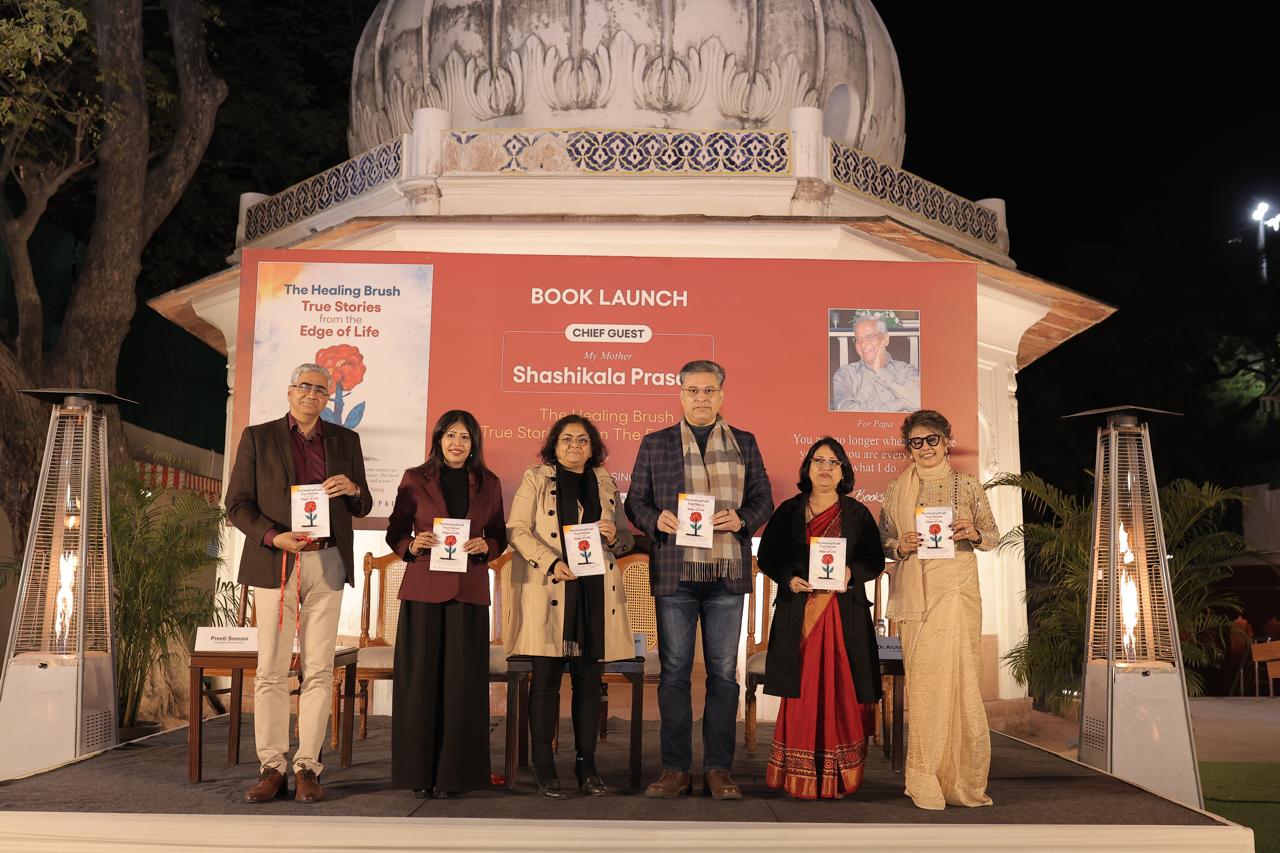
The Book, Healing Brush, Stories From The Edge of Life is an intimate chronicle of survival, vulnerability, and the strength of art therapy in the darkest moments of life. It is a book about art therapy and the impact it can have on people suffering from terminal illness. It captured Dr. Singh’s experiences as the in-house art therapist of the Fortis Memorial Research Institute in Gurgaon. She worked mostly with children suffering from cancer, helping them overcome fear, anxiety and uncertainty. She imparted courage, helped remove mental blocks and most importantly, let the children play, paint and draw, adding cheer to their lives.
The book, a compilation of 17 true stories of patients who were greatly helped by Dr. Archana Singh and art therapy, was launched formally by the author’s mother and a panel of eminent doctors, all of whom had interacted with Dr. Singh during her time in Fortis. The presence of her mother as Chief Guest lent the occasion a deeply personal resonance, grounding the evening in gratitude, lineage, and love.
A panel discussion followed, with Ms Anna Roy, Program Director and Principal Economic Advisor at NITI Aayog; Dr. Satyaprakash Oncologist from Medanta – The Medicity; Dr. Nandini Hazarika Bone Marrow Transplant and Oncologist from Rainbow Children’s Hospital; and Dr. Ramneek Mahajan , Chief of Robotic Orthopaedics and Chairperson at Max Super Speciality Hospital, moderated by Dr. Archana Singh. Together, they emphasized that in critical and life-threatening illnesses, medical treatment alone is never enough. While medicine may heal the body, true recovery demands equal attention to the mind and spirit. The doctors unanimously highlighted the need for integrated support systems—counselling, mental health care, emotional guidance, and creative therapies—stressing that healing must be holistic, compassionate, and continuous, extending far beyond prescriptions and procedures.
At the emotional heart of the evening was the story of Sayan Bajaj. Diagnosed with blood cancer at the age of eight, Sayan found refuge in art therapy during his treatment in 2013. Through games and interactive session with the art therapist Dr. Archana Singh , he processed grief, fear, and isolation. Today, at 23, cancer-free and pursuing law, his presence embodied the promise of recovery shaped by compassion and creativity.
Equally moving were the reflections of Sayan’s parents, who shared how art therapy supported not only their child, but themselves—helping them navigate anxiety, uncertainty, and emotional exhaustion. They emphasised that supporting families of patients is as vital as treating patients, and urged hospitals to institutionalize art therapy as an essential support system alongside clinical care.
Adding another dimension to the evening was a therapeutic music session that gently dissolved boundaries between audience and experience. Guests like Cynthia Mc Caffrey Country Representative India, Joint Secretary Ms. Manmeet Nanda Ministry of Social Justice & Empowerment found themselves singing, swaying, and smiling—rediscovering stillness and joy in the present moment.
The collective rhythm became a reminder that it’s important for each person to feel connected to themselves and to one another in this digitally pervasive day and age. The conversation resonated with national priorities, echoing the 2026 Union Budget’s emphasis on mental health for the first time in Indian history, Highlighting how emotional well-being is now central to GoI’s vision for youth empowerment, employability, and social resilience—particularly in an age shaped by digital isolation, psychological stress, and rising vulnerability among young people.
Against this backdrop, The Healing Brush emerged as both a memoir and a movement—a call to recognize mental and emotional care as foundational to sustainable development and humane healthcare.
More than a literary launch, the event was a testament to how stories—when told with honesty—can restore dignity, inspire policy, and reimagine healing.