
New Delhi, Feb 10 :The Indraprastha Institute of Information Technology Delhi (IIIT-Delhi) successfully conducted the 7th edition of its annual Digital Delhi Conclave (DDC VII) on 6th February 2026, with a series of pre-events on 4th and 5th February, reestablishing its position as a key academic institution in the vanguard of cross-disciplinary discussions on relevant contemporary social issues. Building on the United Nations Sustainable Development Goal 5: Gender Equality, this year’s conclave was themed ‘Equal by Design’, positioning gender not as a standalone concern but as a foundational principle shaping institutions, policies, and everyday life.
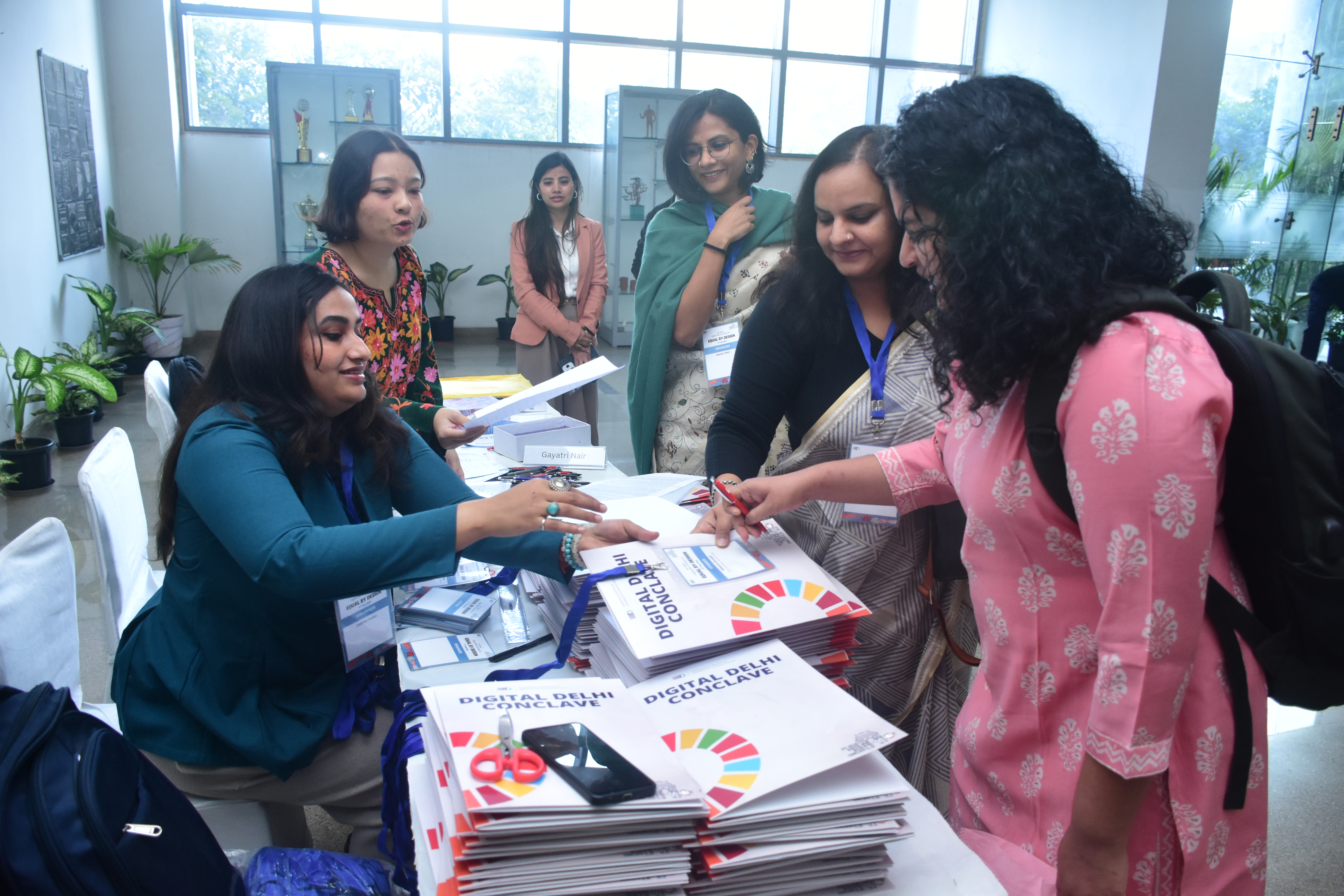
Held at the IIIT-Delhi Campus, the conclave brought together academics, policy-makers, practitioners, journalists, legal experts, media personalities and public health professionals along with members of civil society forthreedays of critical engagement. The conclave examined gender relations within spaces ofeducation, employment, health, jurisprudence, governance innovation and recreationto think about the existing challenges to gender equality as well as the policy measures and reforms that can deliver a more gender-just future for all.
The event commenced with a Welcome Address by Arani Bhattacharya (Dean of Communication and Alumni Affairs), who emphasized onthe role of Digital Delhi Conclave in translating academic research into meaningful public conversations over the past seven years.
The first plenary session on “Gender Matters: Mainstreaming Gender in Public Spaces” had Ravinder Kaur (Professor Emerita, IIT Delhi), Paromita Vohra (Independent Filmmaker and Journalist), Ravi Verma (Executive Director and Board Member, ICRW Asia) and Shahrukh Alam (Lawyer, Supreme Court of India) as panelists. The panel examined how gender is structured and reproduced across institutions, media, law, and demographic regimes, revealing persistent exclusions despite claims of progress. Speakers highlighted how macro-level policies and representations intersect with everyday micro-practices—from laboratories and classrooms to courts and screens—to shape unequal gendered experiences. Emphasising intersectionality, affect, and political economy, the panel called for moving beyond tokenistic inclusion towards the structural redesign of institutions, narratives, and modes of engagement, including sustained work with men and marginalised communities.
The second plenary session on “Towards Equality: Building Gender Responsive Policies and Framework” featuredpanelists such as Ram Gopal Rao (Vice Chancellor of BITS Pilani), Vandana Prasad (Principal Technical Advisor, Public Health Resource Society), Saumya Kalia (Associate Editor of Behanbox), Ishita Chatterjee (Associate Professor of OP Jindal University), and Navneet Kaur (Founder of FemTech India). The session involved thought-provoking discussions on foregrounding strategic policies centered on building gender-responsive ecosystems and rethinking urban built infrastructure, public health, healthcare systems, journalism, and media to create gender-equal spaces.
Last but not least, the third plenary session, “Personal is Political: Gender in Intimate Spaces” highlightedissues such as unpaid labor, data invisibility, household labor, and daily politics that frame women’s roles in India. Panelists in this segment included Rajni Palriwala (Retired Professor at the University of Delhi); Nileena Suresh (Data journalist at Data for India); Shreya (Labour Rights activist at SangramiGharelluKamgar Union); and Sreerupa (Research Fellow and Program Lead, Institute of Social Studies Trust).
Speaking about the conclave, the organizers, Paro Mishra, Gayatri Nair and Soibam Haripriya (Faculty at IIIT-Delhi) shared
, “The Seventh DDC was packed with workshops, movie screenings, participatory visualizations, art installations and three dedicated plenary panels. They comprehensively brought together diverse voices from industry, policy, academia, media and field practice together to deliberate on gender equality across public as well as personal spaces. Specifically, they unpacked how ‘Equal by Design’ can be put into motion through understanding barriers and creating responsive policies to build gender-conscious ecosystems.”
DDC VII was consistent in encouraging public deliberation and collaborative engagement with more than 150 participants attending the event over the span of three days. Thus, beyond recognizing different structural issues of inequality, DDC VII invited individuals to reflect and think of ways to act. The conclave concluded with a networking high tea, providing space for cross-sector dialogue and potential collaborations.
By hosting DDC VII, IIIT-Delhi further consolidated the idea that gender equality should be consciously built into systems, institutions, and practices, rather thanan afterthought.