
Mumbai, Feb 16: The creator economy calls it management. It isn’t. Look at what most creator management companies actually do. They fall into two categories. The first is consulting, connecting creators with brands, negotiating deals, and taking a percentage. No skin in the game. If a campaign dilutes a creator’s audience six months from now, the consultant has already moved on to the next quarter.
The second is assistance, coordinating schedules, managing inboxes, and handling logistics. Necessary work. But the people doing it know, even if they’d never say it out loud, that what they’re doing isn’t management. It’s support.
Neither of these builds a career. Neither takes responsibility for whether a creator is more valuable in five years than they are today. Neither can, because there’s a design problem underneath the entire model that makes it structurally impossible.
A management company gets paid when a creator says yes to a deal. More deals, more revenue. That’s the model. But a creator’s most valuable asset, their audience’s trust is built by saying no. No to the campaign that pays well but cheapens what you’ve built. No to the brand that gets you reach today but costs you credibility tomorrow. Every unnecessary yes spends a little of that trust. Some of it you never get back.
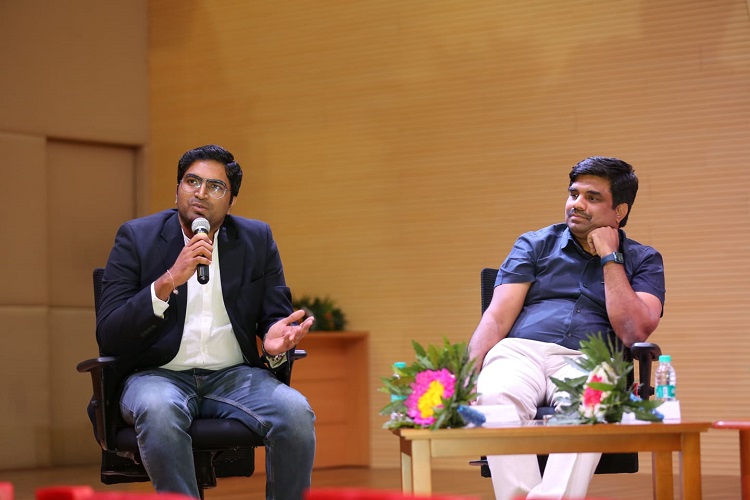
“We’ve turned down more money on behalf of our creators than most companies in this space have made. A management company doesn’t do that. An incubator does. We just spent nine years agreeing to people calling us the wrong thing,” says Hitarth Dadia, CEO, NOFILTR.Group.
The incentives are pointing in opposite directions. The better a management company does its job – more deals, more brands, more revenue – the more it chips away at the very thing that makes the creator worth managing. You can’t fix this with better people or better intentions. It’s not a people problem. It’s a design problem. The model rewards the wrong behaviour.
NOFILTR.Group has operated inside this contradiction for nine years. The company was founded in 2017 to do something the Indian creator economy didn’t have a name for yet, take someone with raw creative ability and no access, often from a small town, sometimes with nothing, and build a career around them from the ground up.
Not represent them. Build them. Develop formats. Construct audiences. Figure out what makes them singular and then protect it, which mostly means saying no. That is incubation. But the industry called it management. So NOFILTR called itself a management company, and over the years, began drifting toward behaving like one. Wider roster. More brand deals. Faster turnaround.
The instinct never drifted. NOFILTR has built 15+ creator careers from scratch and has always been proudest not of the deals it closed, but of the ones it killed. The opportunities it talked creators out of taking. The revenue it left on the table because the numbers worked for this quarter, but not for the next five years.
But an incubator’s instincts inside a management company’s economics is a contradiction that eventually breaks. You cannot sustain a business around saying no when the entire model only pays you for saying yes. So NOFILTR.Group is dropping everything that doesn’t serve what it was actually built to do, and going deeper into the only thing that matters, building careers that compound. The metric is no longer how many campaigns someone runs in a quarter. It’s how much more they’re worth at the end of it. And the year after that.
This is not a pivot. NOFILTR started as an incubator in 2017, before anyone in this industry used the word. It’s going back to what it was built for. The only thing that’s changed is that the structure now matches the instinct.
Dadia is separately building a new venture that aims to solve a different issue. The largest creative workforce in the world, people who collectively reach more humans every day than film, television, and publishing combined, doesn’t own any of the intellectual property it creates. Every creative industry before this one eventually solved that problem. This one hasn’t. This problem has a limited shelf life.