
In this story
India is witnessing a remarkable transformation in the way people create, consume, and earn from digital content. What once began as a platform for sharing photographs, videos, opinions, and personal experiences has evolved into a powerful economic ecosystem known as the creator economy. Today, millions of individuals across India are using platforms such as YouTube, Instagram, Facebook, and LinkedIn to build personal brands, influence consumer behaviour, and generate income.
From lifestyle influencers and gaming streamers to educators, comedians, fitness coaches, and regional-language content creators, digital creators are becoming important participants in India’s modern business landscape. Their influence goes beyond entertainment. They help brands reach targeted audiences, introduce new products, build communities, and shape purchasing decisions.
However, the real business opportunity lies not simply in attracting followers or collecting views, but in turning audience attention into sustainable revenue. This shift from content creation to business creation is defining the next phase of India’s creator economy.
The Rise of India’s Creator Economy
The growth of affordable smartphones, inexpensive mobile data, digital payment systems, and expanding internet access has made content creation accessible to a much larger population. People no longer need expensive equipment, professional studios, or traditional media connections to become creators. A smartphone, an internet connection, and a creative idea can be enough to start.
India’s creator economy has also expanded beyond metropolitan cities. Creators from smaller towns and rural communities are finding audiences through regional languages such as Hindi, Bengali, Tamil, Telugu, Marathi, Odia, and Malayalam. This has opened up opportunities for businesses to connect with consumers who were previously underserved by mainstream advertising.
The creator economy is no longer limited to celebrities or social media personalities. It includes independent professionals, subject experts, artists, entrepreneurs, educators, and niche community builders. Their ability to develop trust and maintain direct relationships with audiences has made them valuable in the digital marketplace.
From Followers to Revenue: Understanding the Business Model
An audience is an important asset, but an audience alone does not guarantee income. The business success of a creator depends on how effectively they convert attention, trust, and engagement into commercial opportunities.
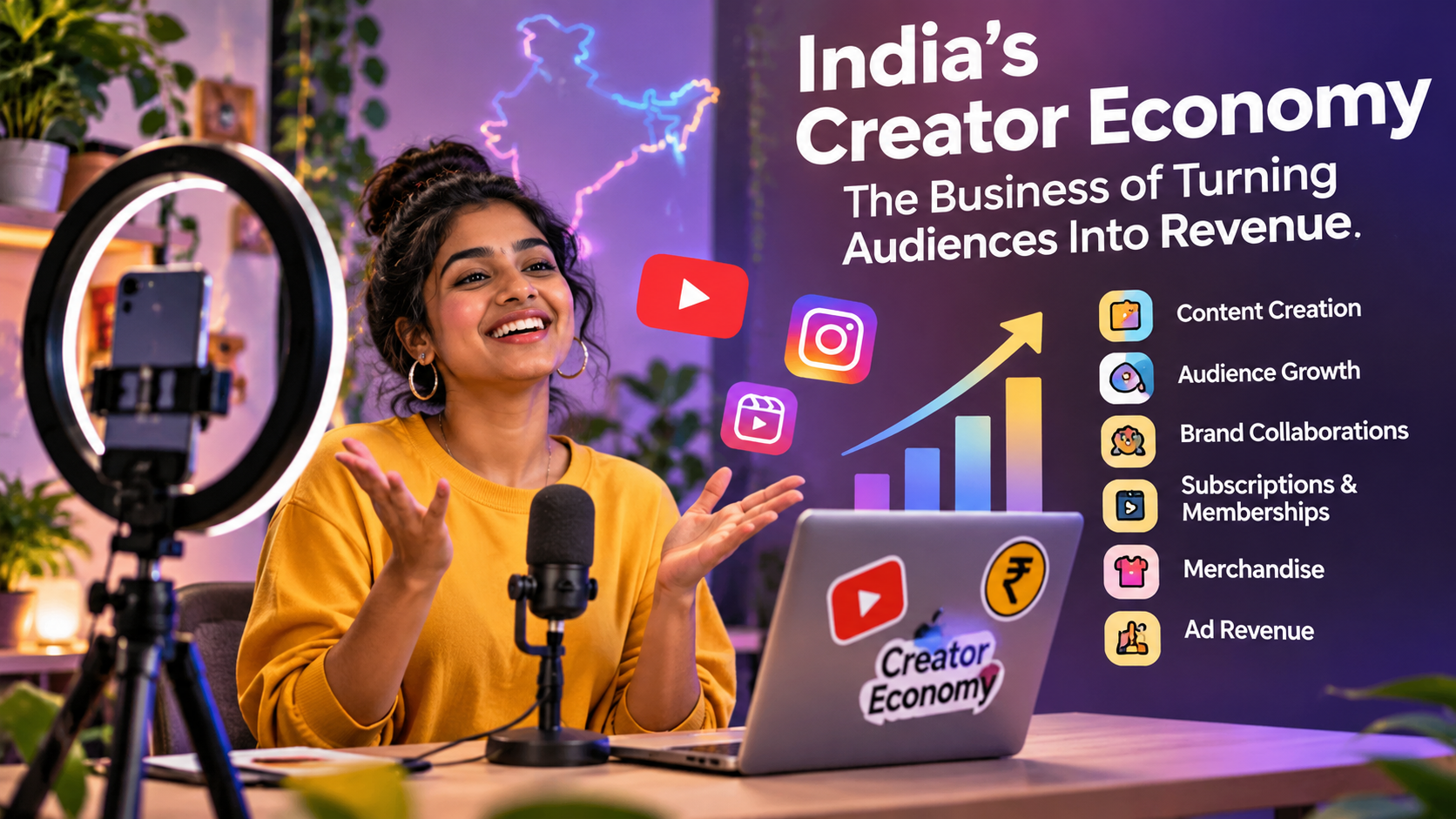
There are several major revenue models driving India’s creator economy.
1. Brand Collaborations and Sponsored Content
Brand partnerships remain one of the most visible sources of income for digital creators. Companies collaborate with influencers to promote products and services through sponsored videos, product reviews, social media posts, and campaigns.
Brands increasingly value creators because they can communicate with specific audiences in a relatable and authentic manner. For example, a beauty creator can promote skincare products to an interested community, while a technology reviewer can influence purchasing decisions among people looking for smartphones or laptops.
The value of these collaborations depends on audience relevance, engagement, credibility, content quality, and campaign performance—not simply follower count.
2. Affiliate Marketing
Affiliate marketing allows creators to earn commissions by recommending products or services through special tracking links or promotional codes.
When followers purchase products through these links, the creator receives a percentage of the sale. This model is particularly useful for technology reviewers, fashion creators, finance educators, and lifestyle influencers.
Unlike traditional sponsored posts, affiliate marketing can generate income over time when older content continues attracting viewers and influencing purchases.
3. Digital Products and Online Courses
One of the most promising opportunities for creators is selling their own digital products.
Creators with specialised knowledge can develop online courses, e-books, templates, workshops, educational resources, and paid learning communities. For instance, a photography creator can sell editing presets, while a business educator can offer entrepreneurship courses.
This model allows creators to move beyond depending entirely on advertising and brand partnerships. They can monetise their expertise directly and build products that generate recurring or repeat revenue.
4. Subscriptions and Membership Communities
Subscriptions provide creators with an opportunity to build a more predictable income stream.
Platforms and independent websites allow creators to offer exclusive videos, premium newsletters, private communities, live sessions, and specialised content in exchange for monthly or annual payments.
The strength of this model lies in audience loyalty. Even a relatively small community of paying members can become a meaningful source of revenue when the creator consistently delivers value.
5. Advertising and Platform Monetisation
Platforms such as YouTube offer monetisation opportunities through advertising revenue, subject to eligibility and platform policies. Creators may also earn through live-streaming features and other platform-supported programmes.
However, platform monetisation has limitations. Revenue can fluctuate depending on views, advertising demand, content category, audience location, and changes in platform algorithms.
For this reason, relying on a single platform or income source can be risky.
The Role of Influencer Marketing in India’s Business Landscape
The growing popularity of digital creators has changed how Indian companies approach marketing. Traditional advertising often communicates a brand’s message to a broad audience, whereas influencer marketing allows businesses to reach specific consumer groups through trusted voices.
For example, a regional food creator can introduce a local food brand to an interested audience. A fitness influencer can help a sports nutrition company reach fitness enthusiasts. Similarly, a technology creator can explain the features of a new smartphone to potential buyers.
Small and medium-sized businesses are also benefiting from this shift. They may not have the budgets required for expensive television campaigns, but they can collaborate with micro-influencers and niche creators to reach relevant audiences.
This has created opportunities for both creators and businesses. Creators gain commercial partnerships, while brands gain access to communities that are often more engaged and targeted.
Why Micro and Regional Creators Matter
One of the most interesting developments in India’s creator economy is the increasing importance of micro-influencers and regional-language creators.
A creator with 10,000 highly engaged followers may sometimes offer more value to a brand than an account with hundreds of thousands of passive followers. Smaller creators often have closer relationships with their communities and can communicate with greater relevance.
Regional creators are equally important because India is a diverse market with different languages, cultures, lifestyles, and consumer preferences.
Content in regional languages makes information more accessible and relatable. It also allows brands to connect with audiences beyond major urban centres.
As digital consumption expands across smaller cities and towns, regional creators are likely to remain an important part of India’s digital business ecosystem.
Challenges Facing India’s Creator Economy
Despite its rapid growth, the creator economy faces several challenges.
1. Unpredictable Income: Many creators depend on sponsorships and platform revenue, both of which can fluctuate. This makes long-term financial planning difficult.
2. Platform Dependency: Changes in algorithms, monetisation policies, or account restrictions can affect reach and earnings. Creators who depend on a single platform face greater uncertainty.
3. High Competition: The growing number of creators makes it increasingly difficult to attract attention and build a distinctive identity.
4. Audience Trust: Excessive sponsored content, misleading promotions, and undisclosed commercial relationships can damage credibility. Maintaining transparency is essential for long-term success.
5. Content Burnout: The pressure to publish regularly, follow trends, and maintain engagement can affect creativity and personal well-being.
6. Monetisation Gaps: Not every creator knows how to price collaborations, negotiate contracts, manage taxes, or develop independent revenue streams. Business knowledge is becoming just as important as creative ability.
Building a Sustainable Creator Business
To succeed in India’s evolving creator economy, individuals must think beyond becoming popular on social media. They need to approach content creation as a long-term business.
First, creators should identify a clear niche and understand their target audience. A focused identity helps build credibility and attracts relevant commercial opportunities.
Second, they should prioritise audience trust over short-term popularity. Consistent, useful, and authentic content creates stronger relationships than chasing every viral trend.
Third, creators should diversify their income sources. Combining brand partnerships, affiliate marketing, digital products, subscriptions, and advertising can reduce financial uncertainty.
Fourth, building an independent digital presence is important. A website, email newsletter, or customer database can help creators maintain relationships with their audiences even when social media platforms change their policies.
Finally, creators must develop professional business skills, including negotiation, marketing, financial management, analytics, and legal awareness.
The Future of India’s Creator Economy
The future of India’s creator economy will be shaped by technology, changing consumer behaviour, and the increasing professionalisation of content creation.
Artificial intelligence is already creating new opportunities for creators through editing tools, content research, translation, scripting, design, and automation. These tools can reduce production time and help independent creators compete more effectively.
At the same time, live commerce, social shopping, paid communities, and creator-owned brands could create new ways to generate revenue. Creators may increasingly move from recommending other companies’ products to launching their own products and services.
The growth of regional content will also remain significant. As more people access digital platforms in their preferred languages, creators who understand local cultures and consumer needs will have an advantage.
Most importantly, the creator economy is likely to move towards a more sustainable business model in which ownership, audience relationships, and diversified revenue matter more than follower counts alone.
Conclusion
India’s creator economy represents much more than a social media trend. It is an emerging business ecosystem that connects creativity, technology, entrepreneurship, and digital marketing.
The ability to attract an audience is only the beginning. The real opportunity lies in understanding that audience, earning its trust, delivering consistent value, and developing revenue models that support long-term growth.
For creators, success will increasingly depend on treating their platforms as businesses rather than simply channels for publishing content. For brands, creators offer a more direct and relatable way to connect with consumers. For the wider economy, this transformation is opening new opportunities for independent entrepreneurship and digital employment.