
In this story
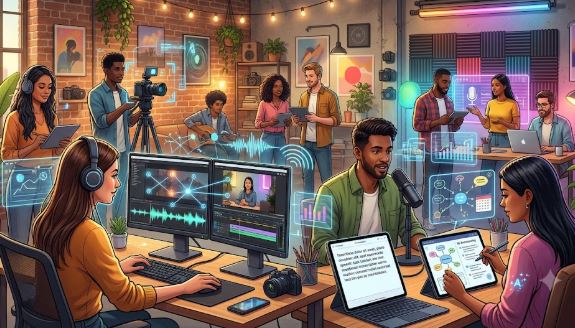
Building a content business once required significant time, technical skills and financial investment. Independent creators often had to manage everything themselves, from researching ideas and writing scripts to recording videos, editing footage and promoting their work. For many, the workload made it difficult to publish consistently and grow an audience.
Artificial intelligence is changing that equation. AI-powered tools can help creators develop ideas, edit videos, improve audio, prepare captions and adapt content for different platforms. Tasks that previously required specialist support can now be handled more efficiently, giving individuals more opportunities to turn their creative skills into a business.
As a result, AI for independent content creators is becoming an important part of the digital economy. The greatest opportunity is not simply producing more content, but using technology to save time, control costs and build stronger relationships with audiences.
AI Is Becoming Part of the Creator Economy
The growing role of AI is reflected in recent industry data. Adobe’s 2026 Creators’ Toolkit Report, based on a survey of more than 16,000 creators across eight countries, including India, found that 87% of creators using creative AI said it had accelerated the growth of their business or audience. Another 75% described the technology as integrated or essential to their workflow.
These findings suggest that AI is moving beyond experimentation and becoming a practical business tool. Independent creators can use it to handle routine work, explore ideas more quickly and compete in a crowded digital marketplace.
However, technology does not guarantee success. Creators still need to understand their audiences, produce useful or entertaining material and maintain a consistent identity. AI can support the process, but the quality of the content remains central to long-term growth.
Faster Content Production at Lower Cost
For independent creators, time and money are often limited resources. Hiring writers, editors, designers and production assistants may be difficult, especially when income is unpredictable.
AI tools can help reduce some of these pressures. They can assist with drafting scripts, organising research, generating subtitles, cleaning up audio and preparing initial edits. Creators can then spend more time refining the message and improving the final result.
Lower production barriers can also encourage experimentation. A creator who previously struggled to produce videos regularly may be able to test new formats or publish across several platforms without significantly increasing operating costs.
For small digital businesses, this efficiency can improve productivity and make it easier to manage a consistent publishing schedule. The important consideration is to use AI where it adds value rather than allowing speed to come at the expense of accuracy or originality.
New Opportunities for Video, Audio and Regional Content
Video and audio production can be particularly demanding for solo creators. Editing long recordings, removing background noise, adding subtitles and preparing content for different screen sizes can consume hours of work.
AI-assisted editing and transcription can simplify these processes. A long video can be converted into shorter clips, while a podcast discussion can be adapted into written summaries, social posts or newsletter material. Translation and captioning tools can also help creators reach audiences who speak different languages.
This creates opportunities for Indian creators working in regional languages. Content originally produced for one audience can potentially be adapted for others, helping creators expand their reach without rebuilding every piece of content from scratch.
Nevertheless, translation requires careful review. Local expressions, cultural context and tone can easily be lost when language tools are used without human editing. Accuracy and cultural understanding remain essential to building trust.
AI Helps Creators Develop Stronger Content Strategies
Producing content consistently is only one part of running a successful creator business. Creators must also understand what their audiences want, which topics attract attention and why viewers return.
AI can assist with brainstorming, organising audience feedback, summarising performance data and identifying possible content themes. These insights can help creators plan their work more strategically instead of relying entirely on guesswork.
For example, a creator may use AI to organise common questions from followers into a content calendar or turn a detailed topic into a series of related posts. The final decisions should still reflect the creator’s knowledge, experience and understanding of the audience.
Used thoughtfully, these tools can help independent creators make better use of limited resources and develop a more consistent content strategy.
Turning Creative Skills Into a Sustainable Business
AI is also opening new possibilities for monetisation. Independent creators can use their skills and more efficient workflows to offer services such as content writing, video editing, social media management, podcast production and digital design.
They may also develop newsletters, online courses, paid communities, digital products and brand partnerships. The ability to manage production more efficiently can make it easier to test these revenue streams and identify which ones fit their audience.
However, more output does not automatically mean more income. A creator still needs a clear value proposition, a defined audience and a reliable way to generate revenue. Businesses and brands are more likely to value content that meets a genuine need than material produced in large quantities without a clear purpose.
For independent creators, the long-term opportunity lies in combining efficient production with expertise, audience loyalty and a sustainable business model.
Human Creativity Remains the Biggest Differentiator
As AI-generated content becomes more common, standing out may become harder. Similar images, scripts and videos can be produced quickly, increasing competition for audience attention.
This makes personal experience, original thinking and a recognisable creative voice increasingly important. People often follow creators not only for information but also for their perspective, personality and ability to explain subjects in a relatable way.
AI can help organise ideas or improve presentation, but it cannot automatically reproduce the trust built through genuine interaction and consistent quality. Creators who rely entirely on generic AI-generated material risk losing the qualities that make their work distinctive.
The strongest approach is to use AI as an assistant while keeping storytelling, editorial judgement and final creative decisions in human hands.
Challenges Around Accuracy, Copyright and Trust
Despite its benefits, AI introduces risks that independent creators cannot ignore. Generated information may be inaccurate, images and voices may raise ownership concerns, and the use of certain material may involve licensing restrictions.
Creators should check facts before publishing, review the usage rights of images, music and other assets, and avoid presenting synthetic material in a way that could mislead audiences. Transparency about significant AI involvement may also help preserve trust, particularly when content deals with sensitive or factual subjects.
There is also a risk of becoming too dependent on automated tools. If creators publish without reviewing the output, mistakes and repetitive material can weaken their reputation.
A responsible workflow combines automation with fact-checking, human editing and clear accountability for the final content.
Conclusion
Artificial intelligence is creating new opportunities for independent content creators by making production more accessible, reducing repetitive work and opening new ways to reach audiences. From video editing and regional-language content to digital services and online products, these tools can help individuals develop creative skills into viable businesses.
Yet sustainable growth depends on more than technology. Creators need original ideas, reliable information, a clear understanding of their audiences and a business model that can generate lasting value.
The future of AI for independent content creators will belong to those who combine technological efficiency with human creativity. By using AI to support their work rather than replace their judgement, independent creators can reduce barriers, strengthen their businesses and build meaningful connections with the audiences they serve.