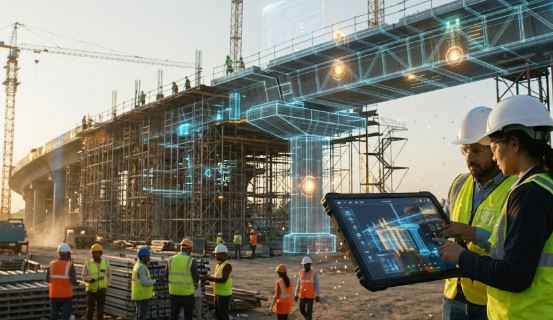
Digital twins in construction are emerging as a powerful technology for improving project planning, controlling costs and managing infrastructure throughout its lifecycle. By creating digital representations of physical buildings, bridges, roads and industrial facilities, businesses can monitor performance, identify potential problems and make better decisions using real-time information.
As construction projects become more complex and investment in infrastructure increases, companies are looking for ways to improve productivity without allowing costs and delays to undermine profitability. Digital twin technology offers a practical approach by connecting physical assets with digital models that can be updated using data from sensors, drones, artificial intelligence (AI) and other monitoring systems.
For developers, contractors, engineering firms and infrastructure operators, the opportunity extends beyond designing buildings more efficiently. Digital twins can help businesses manage construction activities, reduce maintenance expenses and improve the long-term performance of valuable assets.
How Digital Twin Technology Is Changing Construction
Traditional construction models primarily support design, visualisation and project coordination. Digital twins build on these capabilities by incorporating information about the actual condition and performance of an asset.
For example, a digital twin of a commercial building can combine information about energy consumption, heating and cooling systems, equipment performance and maintenance schedules. Facility managers can use these insights to identify inefficiencies and address problems before they lead to expensive repairs.
During construction, digital models can also help project teams compare planned work with actual progress. When integrated with suitable site data, these systems can highlight discrepancies, improve coordination and support more informed decisions about materials, labour and equipment.
This greater visibility can be particularly valuable for large projects involving multiple contractors, suppliers and deadlines.
Digital Twins Help Businesses Control Project Costs
Construction delays, material wastage and unexpected repairs can significantly affect project budgets. Digital twins can help businesses identify potential inefficiencies earlier and improve coordination between different stages of a project.
By simulating construction sequences and resource requirements, project teams can assess potential bottlenecks before they disrupt work on site. Updated project information can also help managers identify delays and adjust schedules more effectively.
Better planning can reduce avoidable rework, improve material utilisation and support more accurate cost forecasting. For contractors working with tight margins, these improvements can make a meaningful difference to project performance.
However, the financial benefits depend on how effectively the technology is implemented. Businesses need to compare the cost of software, equipment and training with measurable improvements in productivity, project delivery and operating expenses.
Predictive Maintenance Creates Long-Term Value
One of the most important applications of digital twins in construction and infrastructure is predictive maintenance. Instead of relying entirely on fixed maintenance schedules or waiting for equipment to fail, asset operators can use connected data to identify signs of potential problems.
Sensors can monitor conditions such as temperature, vibration and energy consumption. When this information is integrated into an appropriate digital twin, it can help maintenance teams identify unusual patterns and investigate developing faults.
For commercial buildings, industrial facilities and transport infrastructure, earlier identification of problems can reduce unplanned downtime and support better maintenance planning.
The approach can also help asset owners manage the full lifecycle of a building or infrastructure project, moving the focus from initial construction costs towards long-term operating efficiency.
Artificial Intelligence and IoT Strengthen Digital Twins
Artificial intelligence and the Internet of Things (IoT) are expanding the capabilities of digital twin technology. Connected sensors provide information from physical assets, while AI tools can help analyse patterns, identify anomalies and support forecasting.
Drones and laser-scanning systems can capture site conditions and compare them with planned designs. When these technologies work together, project teams can gain a clearer understanding of construction progress, asset condition and resource utilisation.
These capabilities can improve decision-making, but they are not automatic guarantees of better performance. Reliable data, compatible software and skilled employees are essential to producing useful results.
Businesses must also protect project information and connected infrastructure systems against cybersecurity risks.
Opportunities for India’s Construction and Infrastructure Industry
India’s infrastructure development and expanding commercial construction activity create opportunities for digital twins across real estate, manufacturing facilities, transport networks, utilities and urban planning.
For construction companies, digital twins can improve coordination between design teams, contractors and suppliers. For building owners, they can support energy management, maintenance planning and more efficient facility operations.
Municipal authorities and infrastructure planners may also use digital representations to examine traffic movement, infrastructure capacity and potential development scenarios. These applications can support better planning when backed by accurate and regularly updated information.
Small and medium-sized construction businesses may find the initial investment challenging. Rather than adopting an entire digital platform at once, they can begin with specific needs such as progress tracking, equipment monitoring or energy management.
A gradual approach can help businesses understand the commercial benefits before expanding their investment.
High Costs and Skills Gaps Remain Challenges
Despite its potential, digital twin adoption involves financial and operational challenges. Companies may need to invest in sensors, software licences, data integration, cloud infrastructure and employee training.
Integrating new systems with existing project management tools can also be difficult, particularly when information is spread across multiple contractors and suppliers. Outdated or incomplete data may reduce the accuracy of a digital twin and limit its usefulness.
Businesses should therefore establish clear objectives before investing. Tracking indicators such as construction delays, maintenance costs, energy consumption, material waste and equipment downtime can help determine whether the technology is delivering meaningful returns.
Training employees and establishing clear responsibilities for data management are equally important for long-term success.
The Future of Digital Twins in Construction
The future of digital twins in construction will depend on how effectively companies turn digital information into practical business decisions. By connecting design, construction and asset management, the technology can help businesses improve project visibility, control costs and maintain infrastructure more efficiently.
For India’s construction and infrastructure industry, adoption is likely to depend on investment capacity, technical expertise and the ability to demonstrate clear financial benefits. Companies that begin with well-defined operational needs and expand gradually may be better positioned to manage implementation costs.
Ultimately, digital twins in construction offer businesses an opportunity to move beyond traditional project management towards smarter, data-driven infrastructure development. Their long-term value will come from measurable improvements in productivity, cost control, asset reliability and the efficient use of resources.