New Delhi, Oct 20: The Delhi government has unveiled a comprehensive Winter Action Plan to combat rising air pollution in the national capital, with a series of measures scheduled to be implemented from November 1, 2026, to February 28, 2027.
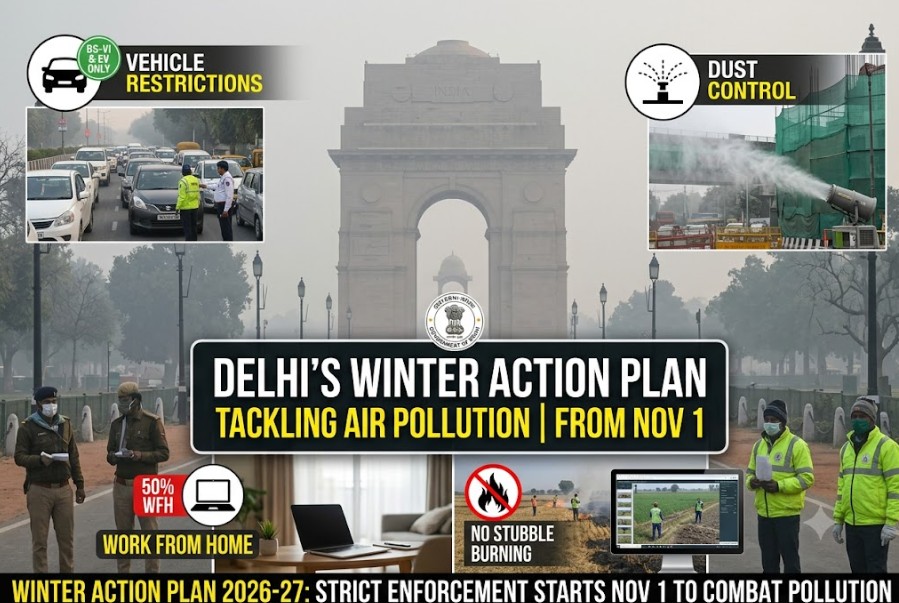
Representational Image
Under the leadership of Chief Minister Rekha Gupta, the plan focuses on curbing vehicular emissions, controlling construction dust, promoting public transport and expanding pollution monitoring to address the seasonal deterioration in air quality.
One of the key proposals is to encourage 50 per cent work from home, aimed at reducing daily commuting and easing traffic congestion. The government also plans to strengthen the use of electric buses, Metro services and last-mile connectivity to encourage commuters to shift towards public transport.
‘No PUC, No Fuel’ Policy to Be Enforced
A major component of the action plan is the proposed enforcement of the ‘No PUC, No Fuel’ policy. Under this measure, vehicles without a valid Pollution Under Control (PUC) certificate will not be permitted to purchase fuel at designated petrol pumps.
The policy is intended to encourage vehicle owners to keep their vehicles compliant with prescribed emission standards and reduce pollution from road transport.
The government has also announced restrictions on vehicles registered outside Delhi that do not meet BS-VI emission standards. The move is aimed at limiting the entry of more polluting vehicles into the capital during the winter pollution season.
Construction Dust Under Increased Surveillance
Construction and demolition activities, along with the transportation of construction materials, will face tighter monitoring to control dust emissions.
As part of the initiative, construction sites will be monitored using artificial intelligence-enabled cameras connected to the government’s central control and command centre. The system is intended to help authorities identify violations and strengthen enforcement.
The Delhi Pollution Control Committee (DPCC) has also stepped up inspections at construction sites ahead of winter and issued show-cause notices to agencies where violations were detected.
Mechanised Road Sweeping to Be Expanded
The Delhi Cabinet has approved the expansion of mechanised road sweeping to stretches where the facility is currently unavailable.
According to the government, the initiative will cover approximately 609 kilometres of roads with a right of way of less than 10 metres. A total of 854 roads across 250 municipal wards have been identified for the purpose.
The measure is expected to help reduce the accumulation and resuspension of road dust, a significant contributor to particulate pollution in urban areas.
IIT Delhi to Help Track Pollution Sources
In another major initiative, the Cabinet has approved a five-year collaboration with the Indian Institute of Technology (IIT) Delhi to continuously monitor and analyse the sources of fine particulate pollution.
The proposed system will study the contribution of major pollution sources, including vehicular emissions, road dust and biomass burning, to PM2.5 and PM10 concentrations. It will also provide information on how their contributions vary throughout the day.
The data is expected to support evidence-based policymaking and help authorities identify pollution sources requiring targeted interventions.
Joint Inspections Conducted at Pollution Hotspots
Meanwhile, the Municipal Corporation of Delhi (MCD), along with Vivek Pandey, Urban Development Secretary of the Government of the National Capital Territory of Delhi (GNCTD), conducted a joint inspection of pollution hotspots and construction sites in the South Zone on October 11.
According to the official release, the team assessed prevailing pollution levels around identified hotspots and reviewed measures being implemented by various government agencies ahead of the winter season.
The inspections form part of the broader effort to strengthen ground-level enforcement and ensure compliance with pollution-control measures.
Focus on Cleaner Air During Winter
Delhi typically experiences worsening air quality during the winter months due to a combination of emissions, dust, weather conditions and other contributing factors. The government’s Winter Action Plan seeks to address these challenges through coordinated action across transport, construction, road maintenance and pollution monitoring.
The success of the measures will depend on effective implementation, regular monitoring and coordination among the agencies concerned.
With the plan scheduled to take effect on November 1, the Delhi government has set its sights on reducing pollution levels and improving public health during the coming winter months.