New Delhi, Mar 22 (BNP): C. R. Patil on Sunday launched the operational framework for Jal Jeevan Mission (JJM) 2.0, signalling a strategic transition towards long-term sustainability and improved service delivery in rural drinking water systems. The Department of Drinking Water and Sanitation (DDWS), Ministry of Jal Shakti, on Sunday released the Operational Guidelines of Jal Jeevan Mission (JJM) 2.0 as Jal Mahotsav 2026 culminated alongside the Sujal Gram Samvad on the occasion of World Water Day.
The announcement was made at the closing ceremony of Jal Mahotsav 2026, coinciding with World Water Day. The upgraded mission, now extended till December 2028, aims to strengthen governance, accountability and reliability of water supply across rural India.
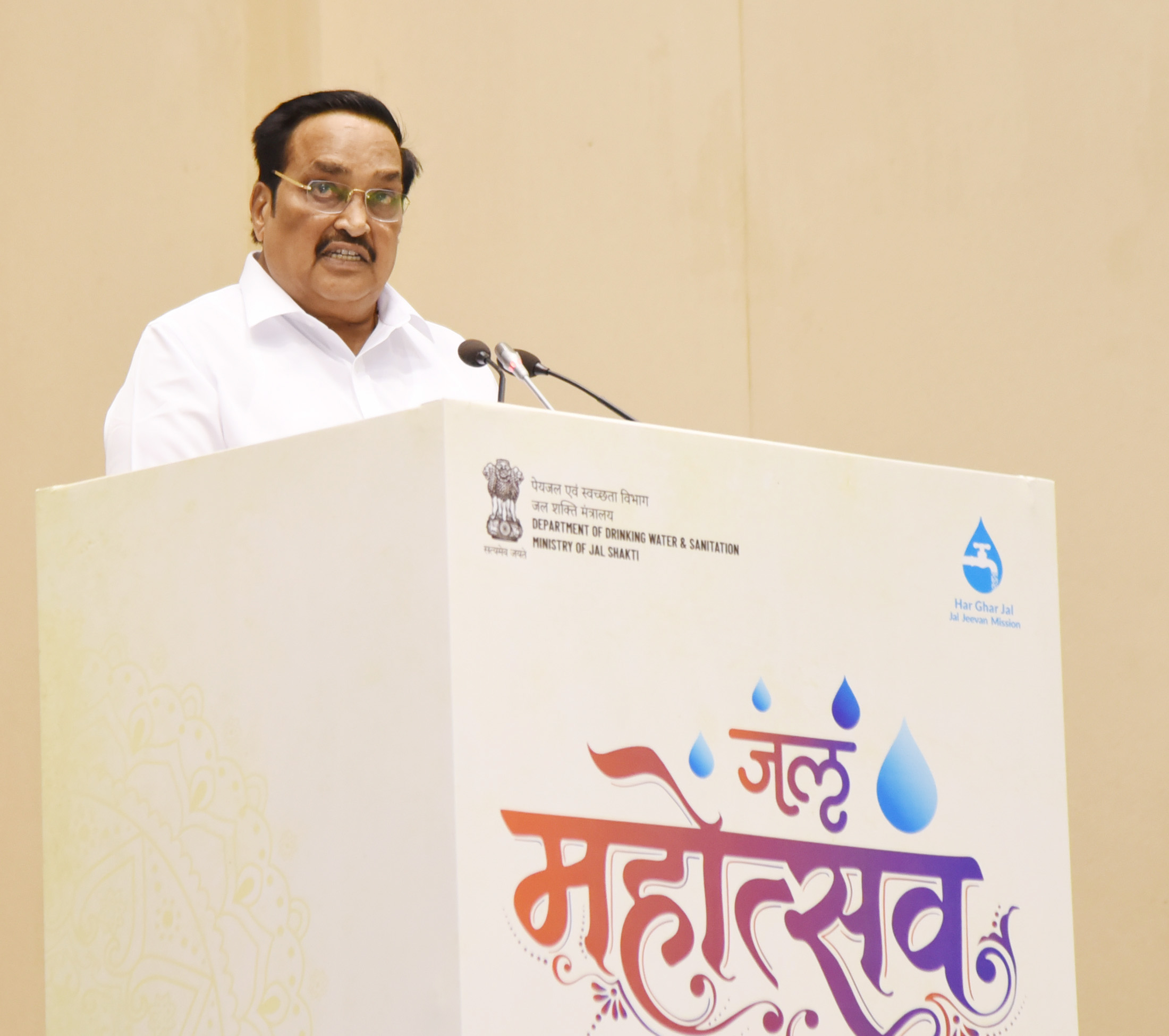
Speaking on the occasion, Patil said the initiative has evolved from a scheme focused on infrastructure expansion to a transformative programme that improves quality of life, particularly for women and children. He emphasised that the next phase will prioritise consistent water supply, system functionality and long-term resource sustainability.
Highlighting the importance of public participation, the minister said nationwide initiatives such as Jal Mahotsav have helped turn water conservation into a mass movement, encouraging community ownership of water resources.
Minister of State for Jal Shakti V. Somanna said the campaign witnessed large-scale engagement across villages through awareness drives, school programmes and community interactions, reinforcing the idea that water management must extend beyond government efforts to collective responsibility.
Under JJM 2.0, the government will focus on defined service benchmarks, decentralised accountability at state and local levels, and sustainability measures such as water conservation, source protection and efficient resource management.
Officials noted that reform-linked agreements with states are being implemented to ensure better outcomes, with several states already committing to the new framework during the campaign.
The event also featured the Sujal Gram Samvad, where village representatives from different states shared their experiences in managing water supply systems, reflecting improved grassroots participation and operational efficiency.
The government reiterated that collaboration between the Centre, states and local bodies, along with active community involvement, will be essential to achieving universal access to safe drinking water and advancing the broader goal of a developed India by 2047.
