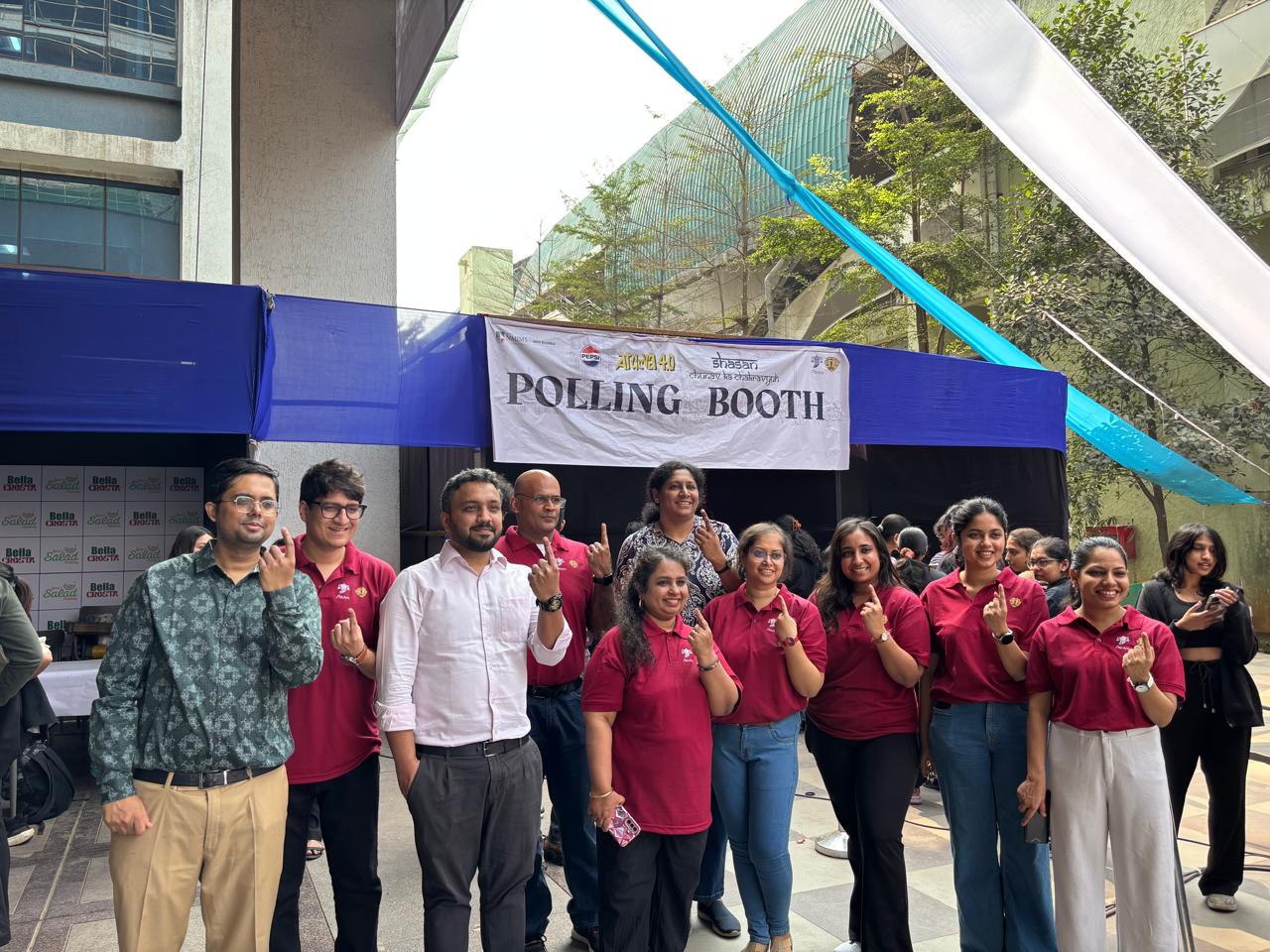
Navi Mumbai, Feb 09: As legal education in India continued to move beyond textbooks and lecture halls, intellectually driven college festivals emerged as powerful platforms for experiential learning. Atulya 4.0, the flagship fest of the School of Law, SVKM’s NMIMS, Navi Mumbai, stood out as a strong example of this shift by blending academic rigour with immersive, student-led simulations that reflected real-world legal and socio-political challenges.
Held on 4th and 5th February, Atulya 4.0 revolved around the theme “The Bombay Beyond: People, Portraits and Politics”, drawing inspiration from the city’s legal legacy, freedom movements, and people-driven politics. The festival brought together over 2,000 students from institutions across the country, offering them hands-on exposure to advocacy, negotiation, governance, and strategic decision-making through a series of intellectually curated engagements.
Unlike conventional college fests, Atulya placed learning at the core of participation. Students engaged in mock trials, negotiation and mediation simulations, political campaign role-plays, policy drafting exercises, stock market simulations, and courtroom-style debates, formats that demanded critical thinking, collaboration, ethical reasoning, and real-time problem-solving. Events such as Shaasan, Amenders’ Playground, Negotiator’s Dilemma, and the Murder Mystery Trial Advocacy enabled participants to experience law as a dynamic and applied discipline rather than a purely theoretical subject.
Commenting on the significance of such platforms, Dr. Arun Sharma, Director, SVKM’s NMIMS Navi Mumbai, said, “Experiential learning has become essential to legal education today. Platforms like Atulya allowed students to apply legal principles to complex, real-world situations, helping them develop judgment, empathy, and leadership skills that cannot be built through classroom instruction alone. This approach is crucial in preparing future legal professionals for the realities of society and governance.”
Over the years, Atulya had evolved from a student initiative into one of the most recognised intellectual festivals within the legal education ecosystem, reflecting a broader shift in how universities approached youth engagement. By combining cultural expression with legal reasoning, policy discourse, and social narratives, the fest encouraged students to think beyond statutes and case laws, towards impact, accountability, and reform.
As India’s youth increasingly sought education that was practical, participatory, and purpose-driven, platforms like Atulya 4.0 demonstrated how college festivals were transforming into laboratories of experiential learning, shaping the next generation of legal thinkers and changemakers.